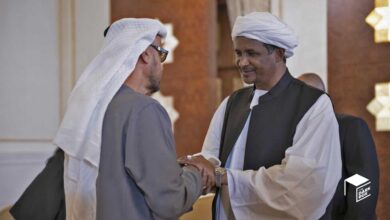
From Abu Dhabi’s Billions to Washington’s Decisions: Are Emirati Investments Creating Conflicts of Interest in U.S. Policy Toward Sudan?
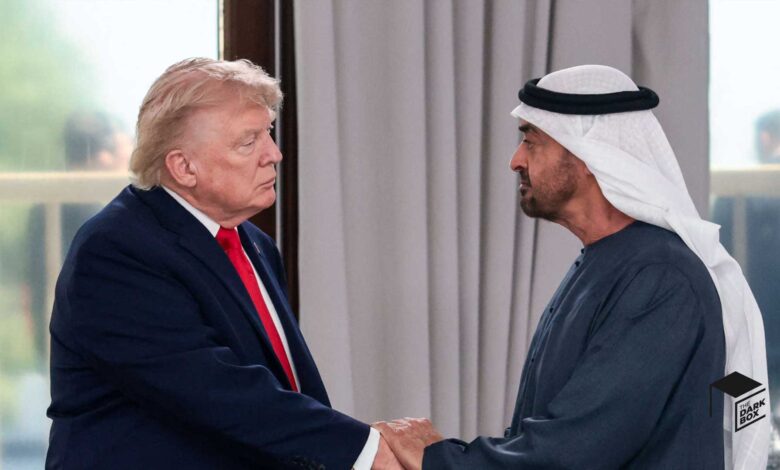
DARK BOX | SPECIAL INVESTIGATION
Investigative Report | Sudan – United Arab Emirates – United States | October 9, 2026
As the United Arab Emirates faces mounting allegations of supporting Sudan’s Rapid Support Forces, billions of dollars in Emirati-linked investments are flowing into businesses connected to Donald Trump’s family and individuals involved in sensitive U.S. diplomatic negotiations. The overlap raises a fundamental question: Can Washington independently confront Abu Dhabi over Sudan while politically connected American figures maintain substantial financial relationships with Emirati investors?
The story begins in Sudan, not on Wall Street.
Since April 2023, Sudan has been devastated by a war that has displaced millions, destroyed civilian infrastructure, and produced widespread allegations of atrocities.
Yet while Washington has condemned the violence and sanctioned networks accused of financing the Rapid Support Forces (RSF), the United Arab Emirates—repeatedly accused of supplying the paramilitary group—has continued to deepen its economic and strategic relationships with the United States.
Those relationships now extend beyond conventional diplomacy, defense cooperation, and trade.
They include investments connected to the family of President Donald Trump, financial arrangements involving businesses associated with his diplomatic representatives, and potential multibillion-dollar transactions involving Russian energy assets.
At the center of several of these relationships stands Sheikh Tahnoon bin Zayed Al Nahyan, the UAE’s national security adviser, brother of President Mohamed bin Zayed, and a central figure in Abu Dhabi’s investment establishment.
The question is not simply whether the Emirates has sufficient influence in Washington to protect its interests.
It is whether the growing financial entanglement between Emirati investors and individuals close to the American presidency creates conflicts of interest that could affect U.S. decisions concerning Sudan.
There is no publicly established evidence that a specific Emirati investment purchased a particular American decision on Sudan. But the documented financial relationships, combined with the UAE’s strategic interests in the conflict, create legitimate questions about transparency, access, and the independence of U.S. foreign policy.
1. Sudan: Washington Sanctions Networks Operating From the UAE
On January 7, 2025, the U.S. government determined that members of the Rapid Support Forces and allied militias had committed genocide in Sudan.
The determination was accompanied by sanctions against RSF commander Mohamed Hamdan Dagalo, widely known as Hemedti, and seven companies based in the United Arab Emirates and linked to the paramilitary organization.
The U.S. Treasury Department identified Capital Tap Holding, a UAE-based company, as having provided money and military equipment to the RSF.
These were not merely accusations advanced by Sudanese political factions or human rights organizations. They were findings publicly announced by U.S. government agencies and used as the basis for financial sanctions.
In January 2025, Reuters also reported that members of the U.S. Congress were seeking to block weapons sales to the Emirates over allegations that Abu Dhabi was supplying arms to the RSF.
The UAE has consistently denied providing military support to the group.
Nevertheless, the American findings establish an important contradiction.
Washington has identified and sanctioned networks operating from Emirati territory that it says contributed to the RSF’s military capabilities. At the same time, the United States has maintained extensive diplomatic, security, and economic cooperation with the UAE.
This distinction matters.
Sanctioning companies operating within a country is not equivalent to holding that country’s government responsible. Such a distinction may reflect legal standards, available evidence, or broader strategic considerations.
But it also creates a question for investigators: What determines how far Washington is prepared to go in confronting the networks accused of fueling Sudan’s war?
And could the UAE’s extensive economic relationships with politically connected Americans influence that calculation?
2. Tahnoon bin Zayed: Where Emirati National Security Meets Private Capital
Sheikh Tahnoon bin Zayed occupies an unusual position within the Emirati political and economic system.
He is not simply a wealthy investor or the head of a private investment group.
As the UAE’s national security adviser and brother of the country’s president, Tahnoon operates at the intersection of state security, foreign policy, intelligence relationships, and global investment.
His influence extends across major investment structures with interests in technology, artificial intelligence, finance, and international markets.
That dual role is essential to understanding the potential conflicts of interest surrounding Emirati investments in the United States.
When capital associated with Tahnoon enters a business linked to the American president’s family, the transaction involves more than two commercial counterparties.
It connects investment interests associated with a senior foreign security official to the private financial interests of individuals close to the U.S. presidency.
The concern is particularly significant because the UAE has direct interests in American decisions concerning Sudan, arms transfers, sanctions, advanced technology, and regional security.
The investment relationships do not, by themselves, establish improper conduct. They do, however, create a need to examine whether adequate safeguards exist to separate commercial benefits from governmental decisions.
3. The $500 Million Trump-Linked Investment
One of the clearest examples of this financial overlap involves World Liberty Financial, the cryptocurrency venture associated with the Trump family.
Reports published in early 2026 described an agreement under which investors linked to Tahnoon bin Zayed acquired a 49% stake in World Liberty Financial for approximately $500 million.
The reported agreement was reached shortly before Trump returned to the White House in January 2025.
The transaction subsequently attracted congressional scrutiny.
On February 5, 2026, Senator Elizabeth Warren and other U.S. lawmakers introduced a resolution examining the investment and its possible relationship to the administration’s decisions concerning advanced artificial intelligence technology exports to the UAE.
According to figures cited in the congressional material, the initial $250 million payment reportedly included approximately $187 million directed toward entities associated with the Trump family and approximately $31 million toward entities associated with the family of Steve Witkoff.
These figures were cited from reporting in congressional proceedings; they should not be treated as judicial findings of misconduct
The significance of the transaction is not limited to its size.
It concerns the identity of the investors, the political connections of the beneficiaries, and the timing of the arrangement.
Investors linked to a senior Emirati national security official established a substantial financial relationship with a business associated with the family of the American president.
That president oversees an administration with authority to impose sanctions, authorize defense cooperation, approve technology exports, and shape U.S. diplomatic pressure on countries involved in international conflicts.
Sudan is one of those conflicts.
The available evidence does not establish that the cryptocurrency investment influenced a U.S. decision concerning the RSF or the UAE’s alleged role in Sudan.
However, the arrangement raises a legitimate conflict-of-interest question: What safeguards prevent private financial relationships with foreign-linked investors from influencing public decisions affecting those investors’ governments?
4. The Binance Transaction: Another Financial Channel
The connections surrounding World Liberty Financial extend beyond the reported equity investment.
In May 2025, the Emirati investment company MGX announced that it would use USD1, the stablecoin issued by World Liberty Financial, to settle a $2 billion investment in cryptocurrency exchange Binance.
The announcement was made in Dubai by Zach Witkoff, a co-founder of World Liberty Financial and the son of U.S. diplomatic envoy Steve Witkoff.
Reuters reported that the transaction could strengthen the commercial position of the Trump-linked cryptocurrency venture, including through the use and circulation of its stablecoin.
MGX said the selection followed an evaluation of alternatives, while Binance had requested settlement using cryptocurrency.
The arrangement illustrates how financial benefits can emerge through structures more complicated than direct payments or traditional ownership stakes.
A foreign investor may help establish demand for a financial product associated with politically connected individuals. That commercial activity can potentially create revenue, strengthen market adoption, or increase the value of the business.
None of these outcomes automatically constitutes corruption or unlawful influence.
But they make it increasingly important to distinguish the commercial interests of politically connected individuals from decisions taken in the name of the U.S. government.
For Sudan, the relevance lies in the broader network.
The same country accused of supporting the RSF is also associated with investment relationships involving businesses linked to the American president and the family of one of his diplomatic representatives.
Whether those relationships have affected Sudan policy remains unproven. Their existence is nevertheless relevant to assessing potential conflicts of interest.
5. The Central Sudan Question: Why Target the Networks but Not the State?
The most important question for Sudan is not whether Washington has taken any action against the RSF.
It has.
The United States imposed sanctions against RSF leadership and associated commercial networks, and additional measures followed during 2026.
The more specific question concerns the scope of American pressure.
Why have U.S. authorities targeted companies and individuals connected to the RSF while maintaining a broad strategic partnership with the UAE, despite allegations concerning the country’s role in the war?
There are several possible explanations.
The U.S. government may possess sufficient evidence to sanction particular companies without meeting the legal or policy thresholds required for broader action against a foreign government.
Washington may also consider cooperation with the UAE essential to other national security priorities, including regional defense, energy markets, technology, and relations with Iran.
Those explanations cannot be dismissed.
But neither do they resolve the potential conflict-of-interest problem created when people close to the American presidency maintain financial relationships with investors linked to that same foreign government.
The question is whether commercial interests have influenced the intensity, timing, or direction of American diplomatic pressure.
Establishing such influence would require evidence from internal deliberations, communications, financial disclosures, or testimony.
Without that evidence, the relationship remains a potential conflict rather than a demonstrated exchange of money for policy.
6. The Lukoil Deal: Russian Oil, Emirati Capital, and American Diplomacy
The proposed acquisition of international assets belonging to Russian oil company Lukoil introduces another dimension to the investigation.
In October 2026, reporting by Reuters and The New York Times described discussions surrounding the potential sale of Lukoil’s international assets, a portfolio valued in the tens of billions of dollars.
The negotiations reportedly involved American billionaire Todd Boehly, Gulf investors, and individuals connected to the political and commercial networks surrounding the Trump administration.
Reports also indicated that Russian President Vladimir Putin raised the issue of Lukoil’s assets during a Kremlin meeting with Jared Kushner and Steve Witkoff in September 2026.
Both men have participated in diplomatic contacts concerning Russia and Ukraine.
The central issue is the potential overlap between diplomatic responsibilities and commercial opportunities.
If individuals involved in negotiations with Moscow also maintain business relationships with parties seeking access to Russian energy assets, investigators have grounds to examine the separation between public responsibilities and private interests.
The U.S. government’s role is particularly significant because the assets are subject to sanctions-related restrictions and potential regulatory approvals.
In other words, American authorities may have influence over whether a transaction can proceed, while politically connected investors may have financial interests in the outcome.
That does not prove that the negotiators themselves hold stakes in the acquisition, or that they have used their positions to advance private interests.
The reported transaction structures and the roles of different investors also require careful verification, particularly because potential partnerships do not necessarily result in finalized ownership arrangements.
Nevertheless, the Lukoil discussions highlight a recurring structural concern: major commercial opportunities involving foreign governments can intersect with the same individuals and networks involved in American foreign policy.
7. What Russian Oil Has to Do With Sudan
At first glance, the proposed purchase of Russian oil assets appears disconnected from Sudan’s civil war.
The connection is not a demonstrated transfer of proceeds from Russian energy transactions to the RSF.
It is the wider pattern of financial and political relationships.
Across cryptocurrency, artificial intelligence, international investment, and energy, Emirati-linked capital has established or explored commercial relationships with individuals and companies connected to American political power.
Some of these relationships involve people who also participate in sensitive diplomatic activities.
This creates several distinct potential conflicts of interest.
Financial conflicts: Private businesses associated with politically connected individuals may benefit from transactions involving investors linked to foreign governments affected by American policy.
Institutional conflicts: U.S. government agencies may regulate or approve transactions involving investors with private relationships to figures involved in diplomacy.
Diplomatic conflicts: American policymakers may have to balance pressure over Sudan against broader economic and strategic interests involving the UAE.
Access-related conflicts: Repeated commercial dealings may create opportunities for privileged contact with politically influential individuals, although access alone does not demonstrate policy influence.
Together, these risks show why an investigation into U.S. policy toward Sudan cannot be limited to public statements and sanctions announcements.
It must also examine the financial relationships, disclosure requirements, meetings, and decision-making processes surrounding American officials and their close associates.
8. The UAE’s Position and the Limits of the Evidence
The UAE has repeatedly denied providing military support to the RSF and says it supports humanitarian assistance and a negotiated political settlement in Sudan.
In May 2025, the International Court of Justice ruled that it lacked jurisdiction to hear Sudan’s case against the UAE concerning alleged genocide-related violations in Darfur.
The ruling did not determine whether the underlying allegations were true or false. It addressed the court’s jurisdiction.
The UAE welcomed the decision.
The American position also requires a nuanced assessment.
U.S. sanctions targeting RSF figures and conflict-related networks continued during 2026. These measures demonstrate that Washington did not simply abandon pressure on actors accused of fueling the conflict.
Likewise, the U.S.–UAE relationship has longstanding strategic foundations independent of the private investments discussed in this investigation.
The existence of those explanations does not eliminate conflict-of-interest concerns, but it prevents a direct inference that Emirati money determined U.S. policy toward Sudan.
The evidence currently supports scrutiny of financial relationships and decision-making safeguards. It does not establish a proven quid pro quo.
9. The Questions Washington and Abu Dhabi Must Answer
A serious investigation into these overlapping interests requires answers from the institutions and individuals involved.
1. The White House and State Department: Have officials reviewed potential conflicts arising from Emirati investments associated with the Trump and Witkoff families when making decisions affecting the UAE or Sudan?
2. The Treasury Department: What legal and evidentiary standards determined the scope of sanctions against RSF-linked networks operating from the UAE? Were broader measures considered?
3. The National Security Council: Have Emirati officials discussed Sudan with American officials or representatives who maintain personal or family-linked commercial relationships with Emirati investors?
4. Investors linked to Tahnoon bin Zayed: Who are the ultimate beneficial owners of the investments associated with World Liberty Financial, and what measures separate those investments from official Emirati policy objectives?
5. Steve Witkoff and Jared Kushner: What disclosures and safeguards apply to their business relationships and participation in diplomatic discussions involving foreign governments and commercially valuable assets?
6. Congressional oversight committees: Have lawmakers sought records concerning Emirati investments, technology export approvals, sanctions deliberations, and communications relating to the Sudan conflict?
The answers would help distinguish between three materially different possibilities: financial relationships that did not affect policy, inadequately managed conflicts of interest, or actual influence over governmental decisions.
Each requires a different level of evidence and carries different implications for accountability.
Conclusion: Sudan and the Boundary Between Private Wealth and American Foreign Policy
The documented relationships reveal a significant expansion of Emirati-linked investment into sectors and businesses connected to individuals close to the American presidency.
They include a reported $500 million investment in a Trump-linked cryptocurrency company, a $2 billion Binance transaction involving a stablecoin issued by that company, and discussions of major Russian energy transactions involving politically connected investors.
At the same time, the UAE continues to face allegations concerning its role in Sudan’s war, including allegations that prompted U.S. sanctions against companies operating from Emirati territory.
These developments do not establish that American policy toward Sudan has been purchased through Emirati investments.
They do establish why the separation between private financial interests and public foreign-policy decisions deserves close examination.
The consequences extend beyond the reputations of individual investors or politicians.
For Sudan, decisions concerning sanctions, arms transfers, diplomatic pressure, and accountability can affect the conduct of the war and the prospects for ending it.
The public therefore has a legitimate interest in knowing whether those decisions are made independently of private commercial relationships involving foreign-linked capital.
The central question is not whether Abu Dhabi has invested heavily in relationships connected to American political power. The documented transactions show that substantial financial relationships exist.
The question is whether Washington has sufficient safeguards to ensure that those relationships do not shape its response to a war in which the UAE stands accused of supporting one of the principal armed parties.
Until the relevant financial disclosures, communications, and policy deliberations are subjected to independent scrutiny, the potential conflict of interest will remain unresolved.
And for Sudan, that uncertainty matters.