UAE-Funded Mercenary Operation Targeted British Activist in London, Raising Questions Over Abu Dhabi’s Covert Reach
Dark Box Investigation
A covert surveillance operation financed by the United Arab Emirates targeted a British Muslim activist on British soil, with a mercenary working for Abu Dhabi discussing the possibility of physically eliminating him, according to confidential material and reporting reviewed by Dark Box.
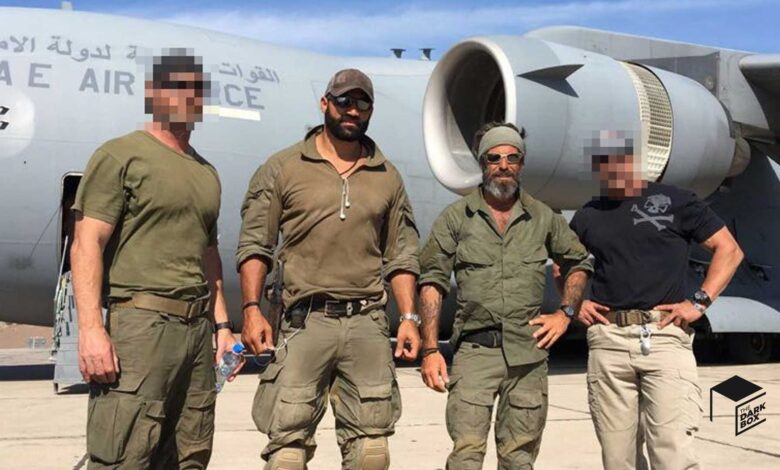
The operation targeted Anas al-Tikriti, chief executive of the London-based Cordoba Foundation. At its center was Abraham Golan, a Hungarian-Israeli dual national who ran the private security company Spear Operations Group and had previously worked on operations for the UAE in Yemen.
The evidence described in the reporting—including financial records, emails, WhatsApp messages, witness testimony, photographs, maps and surveillance material—raises a far more serious question than foreign monitoring alone: Did a government allied with Britain finance private operatives who contemplated lethal action against a British-based political activist in London?
The available material documents a surveillance and targeting operation and reported discussion of killing Tikriti. It does not establish that an assassination was formally authorized by the UAE or attempted in Britain. That distinction is critical.
The Money Trail to Abu Dhabi
According to financial records cited in the investigation, Golan was receiving substantial payments from the UAE while the London operation was underway.
He reportedly received a six-figure annual retainer in addition to significant operational bonuses. Just weeks before traveling to London in December 2016, Golan received a $1 million payment connected to an operation in Yemen.
That financial relationship is particularly significant because Golan was not an unfamiliar contractor suddenly appearing in Britain.
His company had previously assembled Western military veterans for UAE-backed operations in Yemen targeting individuals Abu Dhabi considered enemies. Golan later publicly acknowledged the existence of what he described as a UAE-sanctioned “targeted assassination” program there.
Former US Special Forces veteran Dale Comstock, who participated in the Yemen operation, later summarized the relationship starkly: “For all intents and purposes, we were Emirati soldiers.”
The London case therefore raises questions about whether tactics associated with a conflict zone were being considered for use inside a Western capital.
Finding Anas al-Tikriti
According to the material, Golan contacted a British strategist identified under the pseudonym “Victor” in November 2016.
His objective was specific: establish channels to Tikriti and the Cordoba Foundation.
Golan subsequently traveled to London and offered Victor £50,000 to help locate Tikriti. The proposed payment was later increased to £100,000.
The operation had already moved well beyond basic political research.
Golan reportedly possessed photographs of Tikriti’s home and vehicle, maps and satellite imagery, and information concerning his movements between his residence and workplace.
Such material would potentially allow an operational team to establish patterns of life: when a target leaves home, where he travels, what vehicle he uses and where he can predictably be located.
According to the investigation, Golan explicitly told Victor that he was working for the UAE and explained that Abu Dhabi viewed Tikriti and the Cordoba Foundation through the prism of organizations it regarded as security threats.
From Surveillance to Talk of “Elimination”
It is at this point that the case becomes considerably more disturbing.
During one meeting, according to the account provided by Victor, Golan discussed the possibility of physically eliminating Tikriti.
A former US Navy SEAL working with Golan reportedly drew a finger across his throat when asked what could happen to the British activist.
Victor said the conversation changed his understanding of the mission.
“I became increasingly worried about what this operation entailed,” he later recalled.
The reporting does not establish that an order to assassinate Tikriti was issued or that an attempt was made. But the discussion of lethal action is significant given Golan’s background and his company’s previous activities in Yemen.
A subsequent message sent by Golan added another layer of concern.
“War is coming to Europe and we are at the beginning of a huge program,” he reportedly told Victor.
What Golan meant by a “huge program” remains unclear.
But according to the investigation, the operation did not necessarily end when Golan left Britain for Washington. He informed Victor that his “team” remained in London.
Victor eventually withdrew because he feared the operation could culminate in an assassination.
Police Later Warned Tikriti His Life Could Be at Risk
What happened afterward provides important context.
Tikriti was subsequently visited twice at his London home by police officers who warned him that his life could be in danger.
The officers reportedly did not disclose the nature or origin of the threat.
Years later, after being confronted with photographs and communications connected to Golan’s operation, Tikriti described his reaction as physical revulsion.
“At the time, my children were three and one and a half years old,” he said.
The police warnings do not by themselves prove that the threat identified by British authorities originated from Golan’s operation. But their existence adds an important unresolved dimension to the case.
The Yemen Precedent
The significance of the London operation becomes clearer when examined alongside Spear Operations Group’s activities in Yemen.
In 2015, Golan’s company was reportedly hired to assemble a team of Western military veterans to target individuals whom Abu Dhabi considered hostile.
One target was Yemeni politician Anssaf Ali Mayo. His office was attacked with explosives, and Mayo has subsequently described suffering psychological and emotional trauma from the attempted assassination.
Golan later acknowledged a targeted-killing program in Yemen and said it had been sanctioned by the UAE.
This history matters because it transforms the London reports from an isolated surveillance story into a question about whether a contractor experienced in lethal overseas operations was exploring similar methods against a target in Britain.
Dark Box cannot establish from the supplied evidence that the UAE authorized Tikriti’s killing. But Golan’s discussion of elimination cannot be separated from the type of operations his organization had previously conducted for Abu Dhabi.
Abu Dhabi’s Political Campaign Reaches Britain
The operation also unfolded against a broader political dispute between the UAE and Britain over political Islam.
Abu Dhabi had designated the Cordoba Foundation and several other British organizations as terrorist entities in 2014. Britain did not adopt the same assessment. A UK government review published the following year found no evidence that the Muslim Brotherhood itself had committed terrorist acts in Britain.
The Cordoba Foundation has consistently rejected claims that it has a formal organizational relationship with the Brotherhood, while Tikriti has rejected suggestions that he represents a security threat.
This discrepancy is central to the case.
A foreign government may designate an organization according to its domestic security framework. That does not give it authority to conduct coercive or potentially lethal operations against individuals residing in another sovereign state.
If the evidence is accurate, Abu Dhabi’s political definition of its enemies may have followed those individuals beyond the Middle East and into London.
An Ally in Public, a Covert Operation in Private
The timing adds another striking contradiction.
The alleged operation occurred while Britain and the UAE were publicly strengthening diplomatic and economic relations.
Only around two weeks after Golan initially contacted Victor, then-Prince Charles traveled to Abu Dhabi as part of efforts to reinforce bilateral ties.
British officials knew London and Abu Dhabi disagreed over political Islam, according to the reporting, but said they had no knowledge of a mercenary operation being prepared on British territory.
The UK Home Office declined to discuss security or intelligence matters. The UAE embassies contacted for comment by the original reporting outlet had not responded by publication.
A Question of British Sovereignty
For Dark Box, this case ultimately extends beyond Anas al-Tikriti.
Foreign intelligence services routinely gather information abroad. But hiring private military contractors to conduct physical surveillance—and discussing eliminating a resident of the host country—would cross into fundamentally different territory.
It would raise questions about British sovereignty, foreign interference and the use of private contractors to create distance between governments and operations too politically dangerous to conduct openly.
Mercenaries provide something conventional state institutions cannot easily offer: deniability.
The contractor performs the operation. The financial relationship can be layered through companies and payments. The sponsoring government remains several steps removed from activities on the ground.
That makes reconstructing the command structure essential.
Who commissioned Golan? Who approved the payments? What instructions were provided? Who selected Tikriti? Who received surveillance reports from London? And, most importantly, did anyone authorize the discussion to progress from surveillance toward physical elimination?
Dark Box Conclusion: The Trail Does Not End With the Mercenary
The evidence described in this case presents a disturbing sequence.
A contractor with a history of UAE-financed operations receives substantial Emirati payments. He travels to London. A British political activist becomes the target of detailed surveillance. Money is offered to locate him. His home, vehicle and movements are documented. Lethal action is discussed. Golan then leaves Britain while reportedly saying his team remains behind. The target is subsequently warned by British police that his life may be in danger.
The available evidence does not establish that Abu Dhabi formally ordered Tikriti’s assassination. But it raises serious questions that cannot be answered simply by pointing to the private status of the operatives involved.
For Dark Box, the central issue is therefore not merely what Abraham Golan contemplated in London.
It is who paid him, who tasked him, who received the intelligence he collected, and how far the people behind the operation intended it to go.
If further evidence establishes that a UAE-financed mercenary network was authorized to move from surveillance toward lethal action, the implications would be profound: an allied foreign state would have used private military operatives to project its campaign against political opponents directly onto British soil.
And in that case, the London operation would not simply be a story about mercenaries.
It would be a story about how far Abu Dhabi’s covert power was prepared to travel—and whether the streets of a Western capital had become part of its battlefield.