The Corridor Battle: How Reported UAE-Israeli Lobbying Seeks to Block a New Gulf-to-Europe Trade Route
A Dark Box Investigative Report
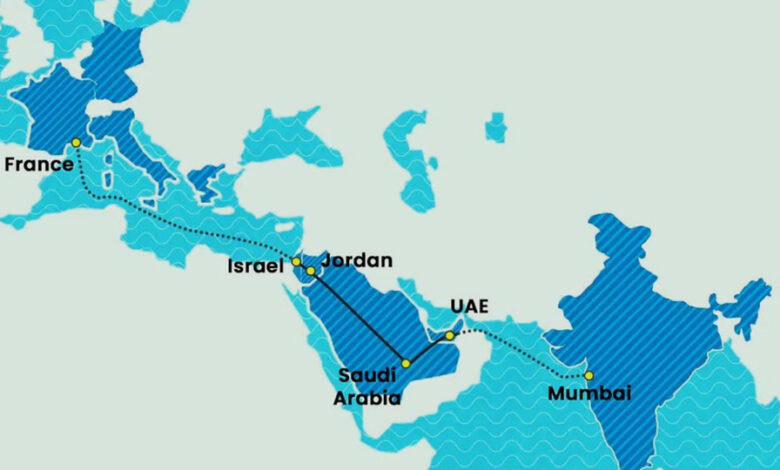
A new geopolitical battle is unfolding far from the battlefield. Instead of missiles and military deployments, the latest confrontation is being fought through lobbying campaigns, strategic messaging, and influence operations in Washington. At the center of the controversy is a proposed overland trade corridor linking the Gulf to Europe through Saudi Arabia, Jordan, Syria, and Turkey—a project that, according to media reports, has triggered coordinated opposition from Israeli officials and figures aligned with the United Arab Emirates.
If realized, the proposed corridor would reshape regional commerce by creating a continuous land route connecting Gulf economies with European markets. Unlike previous initiatives centered on Israeli ports and infrastructure, the new route would bypass Israel entirely, relying instead on an Arab-Turkish transport network stretching across the heart of the Middle East.
According to the reports, this possibility has alarmed senior figures within Israel’s governing coalition, who have intensified contacts with officials in Washington in an effort to persuade the Trump administration to oppose the initiative. The reports also describe concerns that the project could diminish the strategic importance of Israeli infrastructure, particularly the Port of Haifa, while strengthening economic cooperation among Arab states and Turkey.
Although neither the Israeli government nor the White House has publicly confirmed the reported lobbying effort, the controversy has quickly become a broader debate about competing visions for the region’s economic future.
For Dark Box, the significance of this story extends beyond Israel alone.
The proposed corridor would also challenge an economic architecture in which the UAE has invested heavily over the past several years. Abu Dhabi has positioned itself as a central logistics hub linking Asia, the Gulf, Europe, and Africa through an extensive network of ports, shipping companies, investment funds, and infrastructure projects. It has also promoted transport initiatives developed alongside the United States, India, and Israel, particularly following the Abraham Accords.
Against that backdrop, a new overland route running through Saudi Arabia, Jordan, Syria, and Turkey could redistribute trade flows in ways that reduce the relative importance of both Israeli and Emirati logistics networks.
According to the media reports, Israeli officials have argued that the project could also undermine broader strategic interests shared with key partners, including the United States and India. Critics, however, argue that these objections are driven as much by economic competition as by security concerns.
For Abu Dhabi, the stakes are substantial.
Over the past decade, the UAE has invested billions of dollars in ports, logistics corridors, free zones, and transport infrastructure designed to cement its status as one of the world’s leading commercial gateways. Any alternative corridor capable of redirecting cargo toward competing routes would inevitably alter regional supply chains and commercial geography.
The proposed land corridor offers precisely such an alternative.
Rather than routing commerce through maritime infrastructure closely associated with Israeli and Emirati investment strategies, the project would create a continental trade axis connecting Gulf producers directly with Turkey and onward to Europe.
This explains why analysts increasingly view the controversy not simply as a dispute over transportation, but as a struggle over who will control the future map of regional trade.
Media reports suggest that Israeli lobbying has also found sympathetic audiences among some Republican lawmakers and political figures in Washington. Congressional offices reportedly received communications from pro-Israel advocates warning that the project could weaken Israel’s strategic position and undermine broader American interests in the Middle East.
Those arguments reportedly emphasize the risk of reducing the strategic value of Israeli infrastructure while strengthening alternative regional partnerships outside frameworks previously supported by Washington.
For critics of the reported lobbying campaign, however, the debate reveals a different concern.
They argue that infrastructure projects capable of promoting wider regional economic integration should be assessed primarily on their commercial merits rather than through the lens of preserving the competitive advantages of particular states.
From this perspective, the emerging controversy reflects a broader contest over regional influence.
The proposed corridor would deepen commercial links between Saudi Arabia, Jordan, Syria, Turkey, and Gulf markets while potentially creating new patterns of interdependence that operate independently of Israeli infrastructure.
Some observers believe that such a shift could gradually rebalance regional economic power, reducing the leverage associated with existing transport hubs and encouraging new investment flows across alternative routes.
For Abu Dhabi, whose economic strategy depends heavily on remaining an indispensable gateway between East and West, that possibility presents an important strategic challenge.
Although no official Emirati position opposing the project has been announced, commentators have pointed to the convergence of Emirati and Israeli interests in preserving existing logistics networks and previously promoted connectivity initiatives.
This perceived convergence has fueled speculation that opposition extends beyond Israel alone, even though concrete evidence of direct Emirati lobbying has not been made public.
That distinction is important.
The available reporting focuses primarily on Israeli lobbying efforts. Claims regarding a coordinated Emirati role remain matters of analysis and inference rather than publicly confirmed fact.
Nevertheless, the broader strategic context explains why the project has generated intense attention.
If implemented, the corridor could alter investment priorities, reshape freight routes, and create new commercial partnerships stretching from the Gulf to Europe without relying on infrastructure that has become central to recent Israeli and Emirati economic strategies.
For Dark Box, the emerging dispute illustrates how infrastructure has become one of the principal arenas of geopolitical competition.
Trade corridors are no longer merely transportation projects.
They determine investment flows, political influence, diplomatic partnerships, and long-term economic leverage.
The debate surrounding the proposed Gulf-Europe corridor therefore reflects a wider struggle over the future architecture of the Middle East.
Whether the project ultimately proceeds remains uncertain.
Its financing, implementation timetable, and final participants have yet to be officially announced.
Yet the reported lobbying campaign itself demonstrates the strategic importance attached to the initiative.
The controversy suggests that competing regional actors increasingly view transport infrastructure not simply as an economic asset, but as an instrument of geopolitical power.
If the reports prove accurate, the battle over this corridor marks the beginning of a new phase in Middle Eastern competition—one in which influence is measured not only by military alliances but by control over the roads, ports, and commercial routes that will shape the region’s economic future.