Dark Box Exclusive Report Biometric Gatekeeping in Rafah: Why Abu Dhabi’s “Planned Community” Vision for South Gaza Raises Alarm
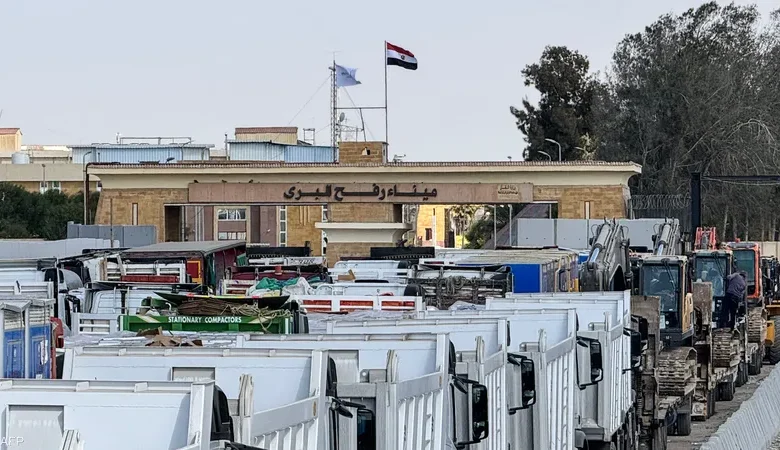
Dark Box has received information indicating that the United Arab Emirates is positioning itself to bankroll what is being described as the first “planned community” in southern Gaza, on the devastated outskirts of Rafah. According to the outline circulating among officials and parties involved in ongoing coordination discussions, the pitch is designed to look like a humanitarian breakthrough: a residential complex offering basic services such as education, healthcare, and running water in a landscape where normal life has been shattered.
But the deeper structure of the proposal reveals something else entirely. This is not simply a reconstruction project. It is an engineered model of controlled living, where survival is offered through compliance, and where access to shelter and services is tied to surveillance architecture that would have been unthinkable under normal conditions.
The information reviewed by Dark Box describes a “case study” community built around biometric registration, security vetting, and entry permissions. Residents would be allowed to live inside the complex, but only after submitting their personal data through biometric methods and passing rigorous security screening. Entry and exit would be technically possible, but repeatedly conditioned on continuous checks designed to prevent the entry of weapons or “hostile elements.” The entire system is built on an assumption that the civilian population must be filtered, monitored, and managed as a security risk first, and treated as human beings second.
This alone should set off alarm bells. Biometric systems are not neutral. They are a tool of permanent identification, tracking, and restriction. In a postwar environment where people are displaced, families are fragmented, and documentation is lost, biometric control becomes a gatekeeper of life itself. Whoever controls that system controls movement, access to services, eligibility, and ultimately, political leverage over the community trapped inside.
The proposal becomes even more controversial through its financial component. Dark Box sources say it includes the introduction of electronic wallets denominated in shekels, presented as a mechanism to “limit the transfer of goods and funds” into channels associated with Hamas. In practice, this would place Palestinian daily life inside a closed financial corridor that can be monitored, restricted, frozen, or conditioned by authorities external to Gaza. It turns basic consumption, aid access, and household survival into data points inside a security-led economy.
The language of the plan frames these tools as necessary safeguards. But Palestinians have seen this pattern before: policies marketed as “security” routinely become tools of domination. When money becomes programmable and traceable, it can be used to punish political identity, restrict family movement, or pressure people into silence. A wallet is not just a wallet if it is tied to biometric registration, movement permissions, and behavioral enforcement.
Perhaps the most revealing element is the education component. Dark Box has reviewed claims that the plan envisions an educational curriculum stripped of support for resistance, provided and supervised by the UAE. That detail transforms the project from housing infrastructure into political engineering. When a foreign state sets the boundaries of acceptable identity, history, and language in a devastated community, education becomes a tool of social redesign. The question is not whether children should learn. The question is who decides what they are allowed to believe, and what they are forbidden to remember.
This is why many Palestinians and observers will interpret this project as more than reconstruction. It appears to be governance by design, without elections, without accountability, and under the protective umbrella of security screening. A model like this does not rebuild Gaza as a free society. It rebuilds a controlled enclave where rights are conditional and monitored.
The location is also politically loaded. The planned complex is described as being on the ruined outskirts of Rafah, in southern Gaza, in an area where Israeli control and oversight is central to any logistical implementation. That makes the project structurally dependent on Israeli security systems and approval. So even if Abu Dhabi funds it, the reality on the ground would remain shaped by the occupying power’s priorities. In such a setting, “humanitarian housing” risks becoming a soft extension of military geography: a rearranged population, concentrated into monitored zones, easier to manage and easier to isolate.
Dark Box notes that the UAE has publicly positioned itself as a humanitarian actor in Gaza, contributing large amounts of aid since the war began. This is real assistance, and it matters to people in crisis. But aid does not automatically equal innocence when it arrives attached to a political blueprint. Humanitarianism can be genuine in one lane and instrumental in another. The danger lies in humanitarian entry points being used to normalize a security-and-surveillance future.
The project is also presented as “Gaza’s first planned community,” a phrase that sounds developmental but carries a hidden message: this is a pilot, a model to replicate. That makes it a template. If the first community is built around biometric gating, controlled finance, curriculum oversight, and perpetual vetting, then the future of Gaza is being drafted as a series of regulated compartments rather than a restored national society.
The underlying logic is clear: a new Gaza can be built, but only if it is a Gaza that can be screened, controlled, and politically reshaped. That is not reconstruction as Palestinians understand it. That is reconstruction as a bargaining tool, offered by outside powers that want stability without sovereignty.
Dark Box concludes that the proposed Emirati-backed complex is being framed as relief, but structured as control. It offers water, healthcare, and schooling, but asks for identity surrender, financial enclosure, and political discipline in return. For a population that has endured devastation, displacement, and siege, the central question becomes unavoidable: is this a housing project, or a new architecture of containment disguised as mercy?