From Somaliland to Southern Yemen: A New Axis of Recognition and Power Projection
Well informed sources have confirmed to Dark Box that Israel recognition of Somaliland as an independent sovereign state marked a decisive shift in regional strategy rather than a symbolic diplomatic gesture. By extending formal recognition to Somaliland, Israel positioned itself as the first member of the international system to legitimize a breakaway entity in the Horn of Africa, setting a precedent with implications far beyond Somalia. According to senior sources who spoke to Dark Box, this move is now being studied as a template for a second and more consequential step: potential recognition of the Southern Transitional Council in southern Yemen.
Dark Box has learned through top secret briefings that Israeli policymakers are actively debating the applicability of what insiders describe as the Somaliland model to the Yemeni south. The Southern Transitional Council, a UAE backed political and military structure, already exercises de facto control over large parts of southern Yemen, including strategic coastline, ports, and islands. Recognition, even if initially informal or indirect, would dramatically alter the balance of power in the Red Sea region.
Sources say the core Israeli motivation is strategic rather than ideological. Southern Yemen occupies a critical geographic position overlooking the Bab al Mandeb Strait and the Gulf of Aden, one of the most sensitive maritime chokepoints in the world. By anchoring itself politically and militarily through a friendly authority in the south, Israel would gain a permanent vantage point to monitor maritime traffic, project intelligence capabilities, and counter hostile actors operating in the Red Sea basin.
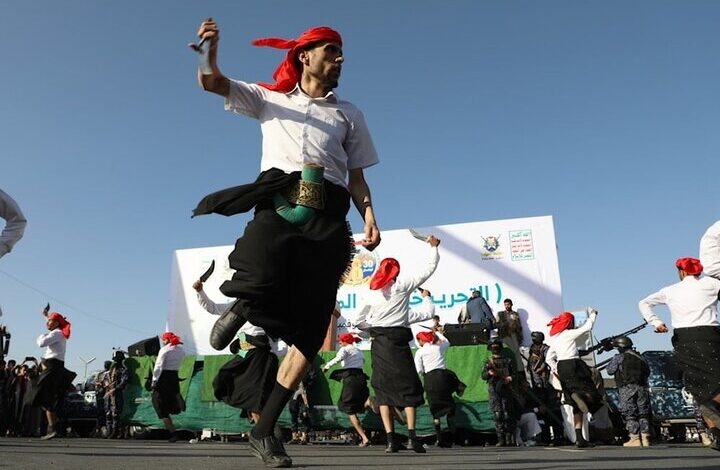
At the center of this emerging strategy is the objective of countering Ansarullah, commonly known as the Houthis. Dark Box sources confirm that Israeli security planners view the Houthi movement not only as a Yemeni actor but as part of a broader axis that threatens Israeli shipping and regional freedom of navigation. Establishing a recognized or semi recognized partner authority in southern Yemen would provide Israel with a forward platform to surveil and, if necessary, strike Houthi assets without relying solely on distant naval or aerial deployments.
Another key objective discussed in leaked assessments is strategic depth. Sources told Dark Box that Israeli military planners see southern Yemen as offering potential depth for air and intelligence operations in the Red Sea theater. This would ease logistical constraints and expand Israel operational envelope against what it defines as regional threats, while reducing dependence on longer range missions from existing bases.
The recognition of Somaliland has already triggered sharp regional backlash. Arab and African institutions, along with Somalia, Egypt, and China, have condemned the move as a violation of territorial integrity and a dangerous precedent. Dark Box sources note that Israeli officials anticipated this response and judged that the strategic gains outweighed the diplomatic costs. This calculation is now being revisited in the Yemeni context, where fragmentation has already normalized parallel authorities.
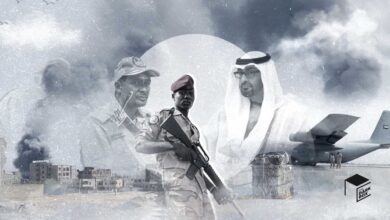
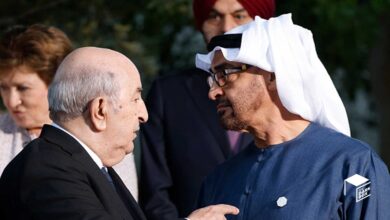
The role of the United Arab Emirates is described by Dark Box sources as central but deliberately obscured. Publicly, Abu Dhabi aligned itself with Arab League statements condemning the Somaliland recognition. Privately, however, leaked communications reviewed by Dark Box indicate that the UAE maintains deep security coordination with both Somaliland authorities and Israel. This dual posture allows Abu Dhabi to publicly defend Arab consensus while quietly enabling shifts that advance its own regional agenda.
In Yemen, the UAE relationship with the Southern Transitional Council is long standing and structural. Dark Box has learned that Emirati planners view the council as a reliable instrument to secure ports, islands, and maritime routes across southern Yemen. By encouraging international engagement with the council, even short of full recognition, the UAE strengthens its grip on the southern theater while sidelining forces aligned with Yemeni unity.
Sources suggest that Abu Dhabi sees Israeli recognition strategies as a force multiplier. An Israeli move toward legitimizing the Southern Transitional Council would internationalize a reality the UAE has already engineered on the ground. In this sense, Israel would provide diplomatic cover while the UAE consolidates economic and security control, creating a mutually reinforcing axis.
Dark Box sources warn that this coordination risks fueling wider regional conflict. Recognition of breakaway authorities entrenches fragmentation and incentivizes similar moves elsewhere. In Yemen, it would further fracture the anti Houthi camp, weaken any remaining national framework, and prolong instability. For the UAE, however, fragmentation is not a byproduct but a tool, allowing it to dominate key nodes without the burden of rebuilding states.
Dark Box concludes that Israel recognition of Somaliland was a signal rather than an endpoint. The discussions surrounding southern Yemen reveal an emerging model in which recognition, security cooperation, and economic leverage are used to reshape the regional order. With the UAE acting as facilitator and beneficiary, the Red Sea risks becoming the next arena where local divisions are transformed into permanent geopolitical fault lines.