Historic Shift in Gulf Politics as Saudi Arabia Confronts Emirati Arms Routes
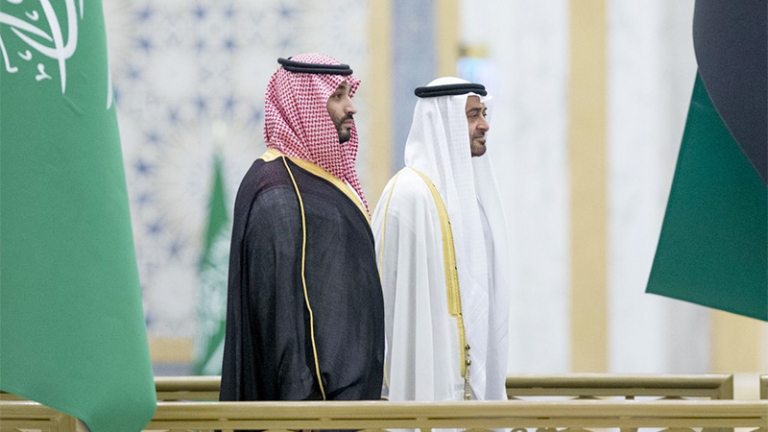
Well-informed sources have confirmed to Dark Box that a dramatic rupture has emerged at the heart of Gulf politics following a Saudi military operation that directly targeted Emirati weapons shipments bound for southern Yemen. The incident marks the most open confrontation to date between Riyadh and Abu Dhabi, two states that until recently presented themselves as aligned partners in regional conflicts.
According to information reviewed by Dark Box, Saudi air assets struck Emirati cargo vessels moving weapons from the Emirati port of Fujairah toward Mukalla on Yemen’s southern coast. The shipments reportedly included military vehicles, ammunition, and logistical equipment intended for armed formations linked to the Southern Transitional Council. Saudi officials, according to internal briefings seen by Dark Box, viewed the operation as a necessary defensive measure after concluding that Emirati supply lines had crossed a strategic red line.
Saudi military footage released shortly after the strike showed cargo being unloaded from the vessels before aerial attacks destroyed the shipments in full. The message was unambiguous. Riyadh was prepared to publicly and militarily interdict Emirati arms flows that it believes undermine Saudi national security and Yemen’s territorial integrity. Dark Box sources say the operation was deliberately limited in scope but heavy in symbolism, designed to signal resolve without triggering immediate escalation.
The military action was quickly followed by an unusual media offensive. Saudi owned outlets launched sustained coverage accusing the UAE of destabilising Yemen by backing separatist forces at the expense of unity. Commentators close to the Saudi establishment framed the issue not as a tactical disagreement but as a strategic betrayal, warning that Riyadh would not tolerate the replacement of one hostile influence in Yemen with another, regardless of past alliances.
For years, Saudi Arabia and the UAE worked side by side in Yemen under the banner of confronting the Houthis. However, Dark Box sources say their objectives diverged early on. Riyadh prioritised a unified Yemeni state aligned with Saudi security interests, while Abu Dhabi invested in building parallel power structures in the south through the Southern Transitional Council. These differences were managed quietly until recent separatist advances in Hadhramaut and Al Mahrah shifted the balance irreversibly.
Dark Box has learned that Saudi intelligence assessments concluded Emirati backing of separatists was no longer tactical but structural, aimed at cementing a permanent sphere of influence along Yemen’s southern coast. Control of ports, energy corridors, and maritime chokepoints became the defining Emirati priority. For Riyadh, this threatened to encircle Saudi Arabia’s southern flank and fracture a neighbour that Saudi policy has long sought to keep intact.
The Saudi response also carries an external dimension. Dark Box sources indicate Riyadh believed Abu Dhabi had overestimated the extent to which external backing would shield it from consequences. By acting decisively, Saudi Arabia aimed to demonstrate that it remains Washington’s central Gulf partner and that regional stability calculations continue to run through Riyadh, not Abu Dhabi. The strike was as much a geopolitical signal as a military one.
This confrontation has wide implications. Yemen risks becoming the primary arena for an intra Gulf power struggle rather than a pathway toward settlement. Saudi planners, according to Dark Box, are weighing further steps if Emirati support for separatist forces continues, including tighter control of air and sea corridors and increased backing for rival local actors. Emirati officials, meanwhile, face a dilemma. Retreating would mean conceding years of influence building. Escalating risks direct conflict with a larger neighbour.
Dark Box sources also warn that the repercussions extend beyond Yemen. Emirati supply routes in other conflict zones, particularly in Africa, may now face heightened scrutiny as regional rivals reassess their tolerance for Abu Dhabi’s interventionist model. The Saudi move has emboldened voices across the region who see Emirati expansion as destabilising rather than stabilising.
The broader significance lies in what this moment represents. The Gulf is no longer operating on the assumption of unified blocs. Alliances are fluid, transactional, and increasingly contested. Saudi Arabia’s action signals a willingness to enforce its red lines openly, even against former partners. The UAE, once adept at expanding influence quietly, now finds itself exposed to direct pushback.
Dark Box concludes that this episode marks a turning point in Arab geopolitics. The confrontation is not solely about Yemen, but about who shapes the regional order. Whether this rupture leads to recalibration or wider confrontation will depend on choices made in the coming period. What is clear is that the era of silent coordination between Riyadh and Abu Dhabi has ended, replaced by open competition with consequences that will reverberate far beyond Yemen’s borders.