UAE-Linked Supply Routes Running Through Libya and Chad Exposed as Core Pillars of a Regional War Network Feeding Sudan Conflict
Well-informed regional and diplomatic sources have confirmed to Dark Box that the conflict in Sudan has given rise to an extensive covert supply network centred on routes running through Libya and Chad, with the United Arab Emirates positioned at the heart of these operations. These disclosures reveal that what began as fragmented smuggling corridors has evolved into a structured military-logistical system feeding the Rapid Support Forces and reshaping the security landscape across North and Central Africa.
According to the sources, the supply chains linked to the UAE are neither accidental nor improvised. Instead, they form part of an integrated strategy involving military material, mercenary deployment, fuel convoys, gold extraction channels and political influence operations, all designed to give the RSF a decisive advantage. Officials close to Sudan’s anti-RSF camp told Dark Box that technicians, trainers and fighters connected to the group have moved into Sudan from nearly twenty countries, with Libya and Chad serving as the main staging areas.
The architecture of this shadow network mirrors the findings of new field research mapping how arms, fuel and personnel traverse the Sahara. The entry points and crossings identified in the Libyan south and Chadian borderlands are consistent with earlier warning signs flagged internally by Sudanese security agencies and foreign intelligence analysts. Dark Box’s own sources confirmed that senior Emirati advisers coordinated with intermediaries in the Libyan Arab Armed Forces under eastern commander Khalifa Haftar. Figures such as Faraj al-Masri, a long-time facilitator of cross-border logistics, and Adil al-Burayqi, a known liaison between Haftar’s forces and foreign partners, were repeatedly named as operational links assisting RSF movements toward the Sudan frontier.
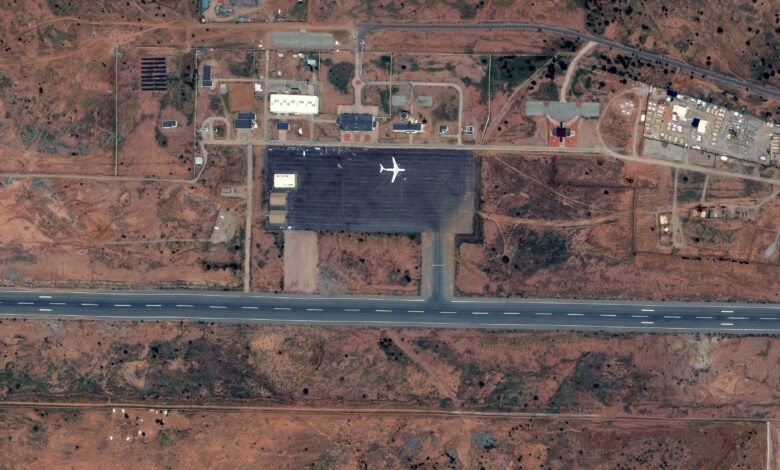
In Libya, the supply structure rests on a triangle of influence linking the southern hub of Kufra, the desert crossing at Ain Kaziyet and the refurbished airstrip at Maaten al-Sarra, which RSF units recaptured earlier this year. This position, described by one Sudanese official as the RSF’s “northern artery”, became a critical bridgehead for material moved from Libya into North Darfur. Convoys managed by the Subul al-Salam brigade and the One Hundred Twenty Eighth brigade of Haftar’s forces routinely transported military material toward the Sudanese border under Emirati financial cover and oversight. Dark Box was told that Emirati personnel embedded with Libyan units were responsible for auditing cargo and ensuring uninterrupted passage.
However, Libya is only one side of the equation. Chad has emerged as the second and arguably more stable dimension of the network. Sources inside Chad’s security establishment disclosed that the desert town of Amdjarass has become the central logistical node, supported by an Emirati-funded field facility established shortly after the war began. Originally described as a hospital for Sudanese refugees, the site has since morphed into a coordination centre linking routes through Bao, Kariari and Zurug. Tribal fighters and mercenary recruiters operating from Amdjarass have facilitated the flow of labour, arms, vehicles and fuel into Darfur. These actors, including individuals such as Zakariya Tchadi and Mahamat Nour Miskine, were described as key intermediaries balancing local tribal interests with external sponsors.
The presence of mercenaries remains one of the most defining characteristics of the system. According to intelligence shared with Dark Box, foreign fighters do not simply travel through the network as passengers; they act as escorts, enforcers and border managers for the supply flows. Their participation ensures that the convoys reach their destinations regardless of territorial fragmentation or military pressure. The UAE’s reliance on this mercenary layer reflects a deliberate approach to outsourcing risk while maintaining operational control.
The Sudan battlefield has been deeply shaped by these uninterrupted supply routes. Analysts interviewed by Dark Box noted that the RSF’s advances in Khartoum, its consolidation in central regions and its eventual capture of el-Fasher all coincided with periods in which the Libya-Chad corridor was functioning at full capacity. By contrast, setbacks suffered by the RSF during early phases of the war were directly linked to disruptions in northern Darfur, including the temporary loss of the strategic Shafir Lit base known as Chevrolet.
Regional experts warn that the UAE’s network is transforming the security economies of Libya, Chad, Niger and Mali. Arms originally destined for the RSF have begun circulating in local markets, sold openly in border towns and online platforms. Sudanese weapons, including machine guns and small arms, are now widely accessible in Chad’s informal markets. Meanwhile, routes once designated for wartime logistics are establishing new peacetime economies built on smuggling, protection services and gold extraction networks tied back to Sudan.
Dark Box sources emphasise that the infrastructure supporting this system, from desert runways to refuelling points and covert warehouses, will long outlast the current war. Even if the Sudan conflict ends, the region will remain shaped by corridors created under Emirati sponsorship.
In the words of a senior regional diplomat who spoke to Dark Box under anonymity, “What the UAE has built through Libya and Chad is not a temporary pipeline but a structural reconfiguration of the region’s security map. These networks are now self-sustaining.”