The Battle for Hadramout’s Oil Exposes a Deepening Rift Between Riyadh and Abu Dhabi
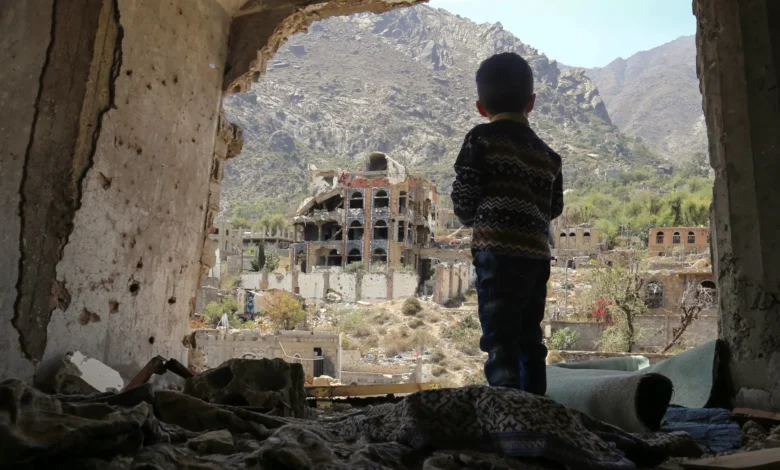
The confrontation unfolding across Yemen’s eastern Hadramout province marks the most serious rupture to date in the long-standing partnership between Saudi Arabia and the United Arab Emirates. What began years earlier as subtle divergence over Sudan’s Rapid Support Forces has now transformed into a widening geopolitical fault line stretching from Khartoum to Mukalla. Dark Box has obtained exclusive intelligence, internal communications and testimonies from senior regional officials revealing that the Hadramout oil plateau is no longer a purely local battlefield but the latest frontier in a broader Saudi-Emirati rivalry.
For years, Saudi Arabia and the Emirates presented a unified façade, jointly intervening in Yemen, backing aligned political groups and pursuing similar visions for regional order. But beneath the surface, the two monarchies harbored competing interests, especially regarding resource corridors, border security and political influence in the Horn of Africa. The war in Sudan exposed these differences. The Emirates financed and armed the Rapid Support Forces while Riyadh quietly backed the Sudanese Armed Forces. The divergent strategies produced tension, but both sides attempted to contain it.
Hadramout has now broken that containment. The province’s oil fields, strategic plateaus and access routes toward the Arabian Peninsula have transformed it into a theater for a rivalry neither side can conceal. The Emirates is attempting, according to Dark Box’s exclusive intelligence leaks, to construct an RSF-style paramilitary structure loyal to Abu Dhabi inside Yemeni territory. Riyadh sees this as a direct threat to its security perimeter and its longstanding influence in eastern Yemen.
Dark Box obtained internal documents from a senior adviser within the Southern Transitional Council revealing the scope of the Emirati plan. The documents, labeled as briefing files for Emirati intelligence officers stationed in al-Rayyan, outline a phased approach to building a paramilitary force independent of Yemen’s internationally recognized state. The plan is titled Silent Ridge. It calls for the consolidation of the Hadrami Elite Forces under a unified chain of command that bypasses Yemeni state institutions and reports directly to Emirati military officials in Aden and Mukalla.
The architecture mirrors the model the Emirates helped craft in Sudan: a powerful, well-funded, autonomous force capable of controlling territory, guarding resource corridors and influencing political negotiations through coercive leverage. The documents describe eventual goals including establishing checkpoints on the plateau, controlling the Hadramout oil pipeline junctions and extending authority into the desert highways leading to the Saudi border.
The architect of Silent Ridge appears to be Abu Ali al-Hadrami, the commander who issued threats last week against the Saudi-backed Hadramout Tribes Alliance. Dark Box sources confirm that al-Hadrami has been in direct communication with Brigadier General Tariq Al-Mazrouei, an Emirati officer whose name has never appeared in public records but who plays a central role in Abu Dhabi’s covert programs across Yemen. Al-Mazrouei’s name first surfaced in confidential messages leaked to Dark Box showing that he met with al-Hadrami and two tribal intermediaries in an isolated compound east of Mukalla to finalize the deployment of reinforcements.
Dark Box also obtained a leaked internal Saudi intelligence assessment describing Emirati activities in Hadramout as an “incipient paramilitary secession project.” The assessment, labeled for internal circulation only, warns Saudi leadership that the Emirates is replicating patterns identical to those it pursued in Sudan: cultivating tribal fragmentation, empowering loyal commanders, and establishing networks of financial dependency. The assessment highlights concerns that Hadramout’s autonomy could ultimately be removed from Saudi influence if the Emirati plan succeeds.
The Saudi-backed Hadramout Tribes Alliance represents Riyadh’s counterweight to the Emirati project. Led by Sheikh Amr bin Habrish, the alliance has mobilized rapidly across the region, dispatching fighters, fortifying positions and declaring its opposition to what it describes as “foreign-backed militias seeking to impose a new reality through force.” Dark Box sources embedded with tribal leaders confirm that Saudi officers have been advising the alliance, urging it to hold defensive lines around the plateau and eastern desert corridors.
In one leaked audio recording obtained by Dark Box, an Emirati adviser named Khalid Al-Darei can be heard telling a Hadrami Elite Forces commander that the Emirates will “not allow Saudi expansion eastward” and that Hadramout will be “secured as a strategic depth for the new southern project.” The phrasing parallels language used by Emirati officials in relation to Sudan when justifying their backing of the RSF as a necessary counterweight to perceived threats.
The standoff intensified when the Emirates deployed reinforcements from Aden, Abyan and Shabwa. Dark Box sources confirm that the reinforcements included specialized units trained in desert warfare and urban breaching operations, indicating preparation for both plateau confrontations and potential conflict inside Mukalla. Saudi intelligence responded by encouraging the Hadramout Tribes Alliance to build a defensive ring around the main oil extraction fields. Riyadh’s calculation, according to a Saudi official who spoke to Dark Box anonymously, is to deny the Emirates any ability to extract financial leverage from the oil zone in the manner the RSF attempted in Sudan.
The dismissal of the UAE-aligned governor, Mabkhout bin Madi, further exposed the depth of discord. Yemeni officials aligned with Riyadh told Dark Box that the dismissal was intended to disrupt Emirati command structures inside the province. But Abu Dhabi’s influence networks, especially through STC-linked commanders, remain firmly embedded. The appointment of Salem al-Khanbashi, though symbolically significant, carries little operational weight.
Amid the escalation, the Mahrah Sit-in Committee issued a strong warning accusing the Emirates of seeking to ignite a broader war in eastern Yemen to secure control over land routes, ports and energy corridors. Dark Box can confirm that senior committee members have been sharing intelligence with Riyadh regarding Emirati movements in the desert. One committee leader described the situation bluntly: “Hadramout is becoming another Darfur. The Emirates wants an RSF of its own here.”
As Riyadh and Abu Dhabi increasingly drift apart, the conflict in Yemen is transforming from a proxy battlefield into a strategic chessboard where both sides are openly challenging each other’s ambitions. After years of covert maneuvering, the Hadramout oil battle has stripped away the façade of unity. What began in Sudan as a split in foreign policy has now expanded into a regional rivalry that neither side is attempting to conceal.
Dark Box concludes that the widening Saudi-Emirati divide reflects a new era of Gulf competition driven by resource security, territorial influence and paramilitary engineering. The consequences for Yemen, already fractured and exhausted by war, could be catastrophic. Hadramout, like Darfur before it, risks becoming the testing ground for experiments in power projection that leave entire regions destabilized for decades.
If the current trajectory continues, the rivalry may soon extend beyond Yemen and Sudan, shaping a new map of alliances across the Red Sea and the wider Arabian Peninsula.