Infiltration and Power Plays in Gaza: How UAE-Backed Militias Are Destabilizing the Strip from Within
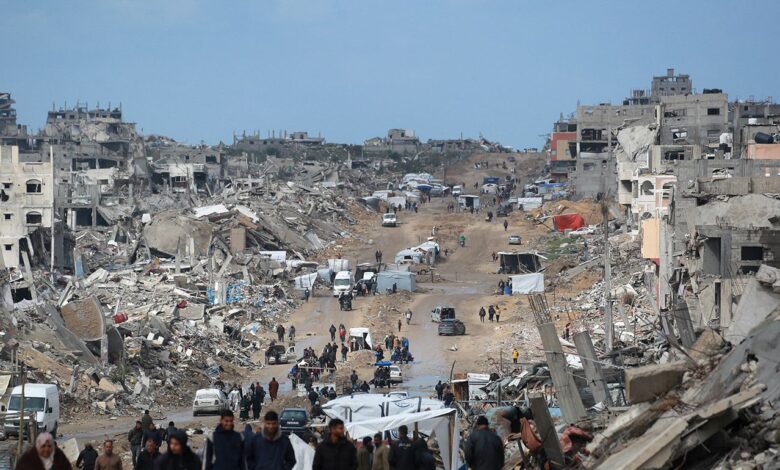
As global attention remains fixed on the destruction wrought by Israel’s war on Gaza, a more covert battle is playing out within its neighborhoods — one that threatens to fracture the unity of Gaza’s resistance and reshape its political future. At the center of this battle is a family-based armed group with long-standing political ties and newly empowered ambitions: the Dughmush militias.
The Hidden Roots of Armed Family Rule
The Dughmush family is not a new name in Gaza’s security landscape. For years, they operated as tribal militias with loose affiliations to political factions, often occupying a gray zone between informal enforcement and organized criminality. But in recent years — and especially since the outbreak of the current war — their role has evolved dramatically.
According to reliable sources inside Gaza, the Dughmush militias have received advanced weapons, funding, and strategic support from United Arab Emirates-linked networks, particularly through figures affiliated with Mohammed Dahlan, the exiled former Fatah security chief now based in Abu Dhabi. Dahlan, long seen as the UAE’s favored candidate for post-Abbas Palestinian leadership, has worked to establish influence through former security officers, tribal leaders, and armed groups like Dughmush.
Armed Takeover and Civilian Abuse
In recent weeks, as some displaced Gazans began returning to neighborhoods in Gaza City, a troubling pattern emerged. Armed Dughmush fighters were found occupying civilian homes and entire blocks, preventing families from re-entering and, in some cases, killing civilians who resisted. Eyewitnesses described the takeover as sudden, organized, and marked by extreme violence.
In response, the Qassam Brigades, along with internal security forces, launched a targeted campaign to dismantle these pockets of armed presence. According to our sources, within hours the majority of affected neighborhoods had been cleared and returned to local control.
A Strategic Threat, Not Just a Local Clash
What distinguishes this event from mere factional tension is its political origin and broader implications. These militias were not operating autonomously. Many members are former trainees of Fatah-era security services, some of whom reportedly trained in camps that were later integrated into frameworks such as the Popular Resistance Committees or the so-called Army of Islam. These affiliations, while Palestinian in appearance, serve broader regional interests.
The timing and coordination of the Dughmush actions point to an attempt to establish a rival internal authority in Gaza at a moment of extreme vulnerability for the population. As Gaza reels from bombing, starvation, and medical collapse, this internal threat adds a dangerous layer to an already catastrophic situation.
The Role of the UAE and the Dahlan Agenda
The Dughmush episode is a visible symptom of a deeper agenda. According to multiple well-placed sources, the UAE is actively investing in “influence assets” within Gaza — from armed proxies to civil society operatives — in a long-term bid to reshape Palestinian leadership in the post-Abbas era.
Dahlan, who has failed to gain traction through traditional political means, now appears to be relying on a strategy of controlled disruption. By inserting armed loyalists into Gaza under the cover of tribal legitimacy, his network aims to weaken Hamas, fracture the resistance, and position itself as a “stabilizing” alternative once the war ends.
Conclusion: The Struggle Within
The confrontation between Qassam forces and Dughmush militias is not just an episode of local unrest. It is a test case for a larger battle over the soul of Gaza and the future of the Palestinian national project. As regional players like the UAE seek to engineer Palestinian politics from afar, Gaza’s defenders now face threats on two fronts: the occupier above, and the infiltrator within.
In a time when unity is a matter of survival, the infiltration of externally backed forces underlines the importance of political sovereignty — not just from Israel, but from any foreign agenda that seeks to subvert Palestinian self-determination.