When Files Become Weapons: How the Epstein Case Returned to Pressure the White House and Threaten a New Escalation
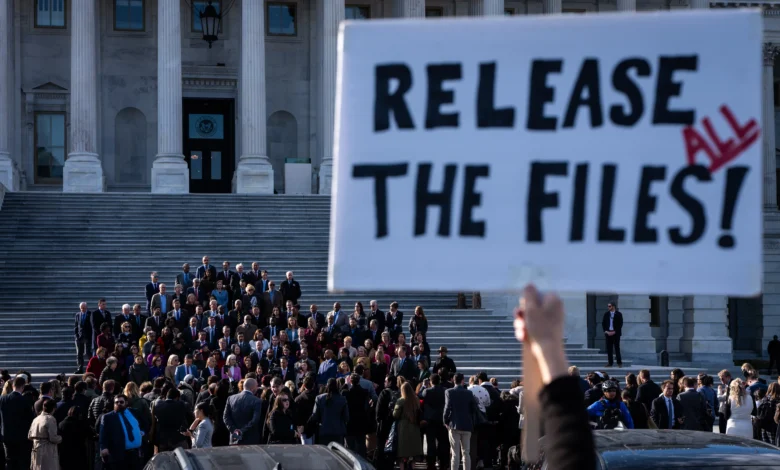
The sudden reemergence of the Epstein file in the midst of a sensitive geopolitical moment has triggered a wave of concern within political and intelligence circles in Washington. What appears on the surface as a revived legal and media controversy is, in reality, unfolding within a much broader and more complex context, where personal vulnerabilities intersect with strategic decisions of war and peace.
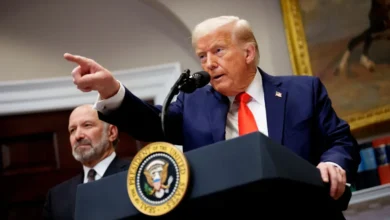
At the center of this unfolding situation is a critical turning point: the decision by Donald Trump to accept a ceasefire with Iran, despite strong opposition from Israel. This decision marked a clear deviation from the escalation path that had defined the previous phase of the conflict. It also signaled a shift in priorities, driven by mounting economic pressure, international reluctance to continue the war, and growing awareness of the costs associated with prolonged confrontation.
However, this shift did not occur in isolation. It came at a moment when multiple actors had invested heavily in sustaining escalation. Israel, in particular, had positioned itself as a key driver of continued pressure on Iran, seeking to maintain momentum and prevent any form of de-escalation that might allow Tehran to recover or consolidate its position. This strategic divergence created tension between Washington and Tel Aviv, opening the door to new forms of pressure.
In this context, the Epstein file takes on a different meaning. Its return to the public sphere immediately following the ceasefire announcement cannot be dismissed as coincidence. Instead, it reflects a pattern often seen in high-stakes political environments, where sensitive information is reactivated at moments of strategic transition to influence decisions and reshape narratives.
The timing is particularly revealing. The renewed focus on Epstein coincided not only with the ceasefire but also with noticeable changes in White House communication. Messaging became more defensive and reactive, suggesting an internal awareness that the situation extends beyond routine political challenges.
Melania Trump’s unexpected public appearance reinforces this interpretation. Her direct and emotionally charged denial of any connection to Epstein marked a significant break from her usual low-profile approach. Such a move signals urgency and suggests that those closest to power perceive an imminent risk, possibly linked to new disclosures or renewed scrutiny.
This development highlights a broader issue: how personal files can be transformed into tools of political leverage. In an environment where information spreads rapidly and narratives shift quickly, sensitive material becomes a powerful instrument. It can shape public perception, constrain political choices, and influence decision-making at the highest levels.
The implications go beyond individuals. When foreign policy decisions intersect with personal vulnerabilities, the credibility of the decision-making process itself comes into question. The perception that war and peace decisions may be influenced by external pressure or personal exposure carries serious consequences for institutional trust.
At the same time, the international dimension adds further complexity. The ceasefire with Iran was not purely a bilateral arrangement between Washington and Tehran. It was facilitated by a broader coalition of regional actors committed to de-escalation. This reduced the space for unilateral escalation and shifted the balance of the conflict.
However, this shift disrupted existing alignments. Actors who supported continued confrontation found themselves on the losing side of a strategic recalibration. In such circumstances, the reactivation of pressure tools becomes a logical response, allowing influence to be exerted indirectly through political and media channels.
The economic factor is also critical. The war had already imposed significant costs on the global economy, affecting energy markets, trade flows, and financial stability. For the United States, these pressures were especially pronounced, contributing to domestic concerns and limiting the sustainability of the conflict. The ceasefire was therefore not only strategic but economically necessary.
Yet stepping back from escalation appears to have exposed new vulnerabilities. The return of the Epstein case at this precise moment highlights how political decisions are embedded within networks of influence that can be activated when needed.
The result is a situation where the boundaries between personal, political, and geopolitical factors become increasingly blurred. The White House is managing not only a foreign policy shift but also a renewed wave of scrutiny and pressure. This convergence creates a fragile environment where the margin for error is extremely narrow.
Looking ahead, the key question is whether this pressure will remain within media and public discourse or translate into concrete political consequences. If the Epstein case continues to gain traction, it could limit Trump’s ability to sustain de-escalation. Alternatively, it could strengthen his resolve to resist external pressure, depending on how events unfold.
In conclusion, the return of the Epstein case at this critical moment is not accidental. It reflects deeper mechanisms of influence operating at the intersection of personal exposure and strategic decision-making. The ceasefire has shifted the balance of the conflict, but it has also exposed new vulnerabilities within the political system.
What is unfolding is a complex struggle over power, direction, and control, where influence extends beyond traditional diplomacy into the realm of personal leverage. The central question is no longer only whether the war will resume, but how these overlapping pressures will shape the next phase of American policy.