Unable to Confront Washington: Dark Box Investigation Reveals UAE Using Elite Voices to Criticize the US War on Iran
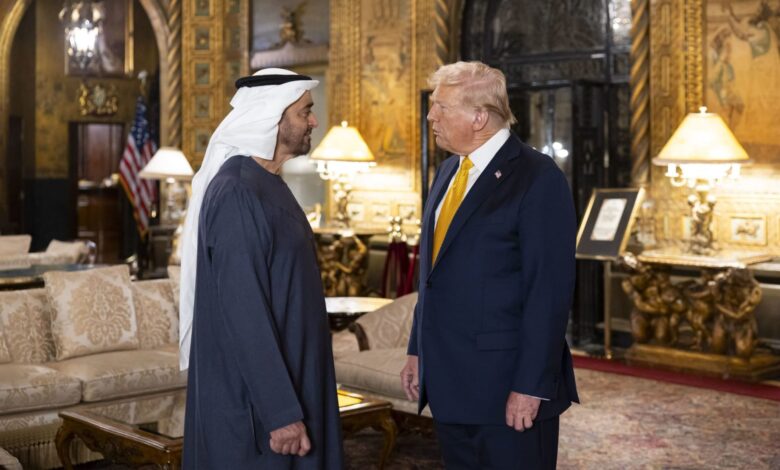
The escalating confrontation between the United States, Israel and Iran has placed the United Arab Emirates in an increasingly uncomfortable position. According to information examined by Dark Box, the UAE leadership has chosen not to directly confront Washington over its decision to strike Iran without prior consultation with Gulf partners, despite the fact that the country has suffered significant economic and security consequences from the conflict.
Instead of issuing direct criticism toward the United States, Emirati authorities appear to be relying on influential figures within the country’s elite circles to express frustration publicly. This pattern became particularly visible after a sharply worded open letter addressed to Donald Trump by Emirati billionaire Khalaf Ahmad Al Habtoor.
Al Habtoor, one of the Gulf’s most prominent business leaders and a figure closely associated with the Emirati establishment, openly questioned the legitimacy and consequences of Washington’s military decision. In his message, the businessman asked who had granted the United States the authority to drag the region into a confrontation with Iran and warned that Gulf countries were being turned into unwilling battlefields.
The intervention was striking not only because of its tone but also because of the identity of the person delivering it. Al Habtoor is not a marginal political voice but a well connected businessman with long standing ties across economic and political circles in the Gulf.
In his letter, Al Habtoor raised several pointed questions directed at the American leadership. He asked whether the decision to strike Iran had been made independently or under pressure from the Israeli government. He also questioned whether Washington had calculated the collateral damage that such a conflict would inflict on Gulf states that would inevitably find themselves on the frontline of retaliation.
The businessman warned that the military campaign had placed Gulf Cooperation Council countries in immediate danger despite the fact that they had not chosen to participate in the war. He also expressed concern that initiatives previously presented as efforts to promote peace in the region were now being overshadowed by expanding military escalation.
For observers of regional politics, the significance of Al Habtoor’s message goes far beyond a single public letter. According to analysts who spoke to Dark Box, the intervention highlights the UAE leadership’s difficulty in openly challenging its most important strategic partner.
The United States remains one of the Emirates’ central security allies, providing military cooperation, defense coordination and extensive political backing. This relationship has historically limited the willingness of Gulf states to confront Washington publicly even when their interests diverge.
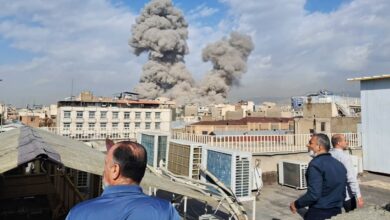
At the same time, the war with Iran has produced tangible consequences for the UAE. Iranian retaliatory actions have targeted infrastructure and strategic facilities across parts of the Gulf, disrupting aviation, trade and logistics networks that are central to the Emirati economic model.
According to sources familiar with the regional dynamics, the UAE has been among the countries most exposed to the economic shock generated by the conflict. The country’s global financial and transportation hubs depend heavily on stability and open trade routes across the Gulf.
Despite these risks, Emirati authorities have refrained from openly criticizing Washington’s decision to launch military operations against Iran without consulting Gulf partners beforehand. Instead, official statements have largely emphasized calls for restraint and diplomatic dialogue.
This contrast between official caution and the sharp criticism voiced by Al Habtoor has raised important questions about the underlying political dynamics. Several regional analysts believe that the businessman’s intervention may reflect deeper frustration within segments of the Emirati elite who fear that the war could damage the region’s stability.
Others interpret the situation differently. According to sources consulted by Dark Box, allowing influential figures to speak critically may represent an indirect strategy by the leadership to signal dissatisfaction while avoiding a direct confrontation with Washington.
Such indirect messaging has long been a feature of Gulf political culture. Business leaders, media personalities and public commentators sometimes articulate positions that governments themselves prefer not to state openly in diplomatic channels.
In his message, Al Habtoor also highlighted the economic burden of war and the broader consequences of escalating military operations. He warned that large scale conflicts impose enormous financial costs while exposing entire regions to instability.
The letter concluded with a broader reflection on leadership and responsibility. Al Habtoor argued that true leadership should be measured not by the willingness to initiate wars but by wisdom, respect for others and the pursuit of peace.
For many observers, the episode illustrates a growing unease among Gulf elites who increasingly feel that their region is being pulled into conflicts shaped by external strategic calculations.
The UAE now finds itself navigating a complex balance. On one side stands its deep strategic relationship with the United States. On the other lies the immediate reality that the consequences of the war with Iran are being felt most directly by the countries of the Gulf.
Dark Box sources suggest that this tension explains why criticism has emerged through indirect channels rather than official statements. By allowing prominent establishment figures to voice concerns, the Emirati leadership may be attempting to communicate its unease without risking a diplomatic rupture with Washington.
Whether this strategy will succeed in influencing American policy remains uncertain. What is clear, however, is that the war with Iran has revealed the limits of the UAE’s ability to openly challenge the decisions of its most powerful ally even when those decisions place the region itself at the center of the conflict.