Sabotaging Peace: UAE–Israeli Moves Threaten Collapse of US–Iran Ceasefire
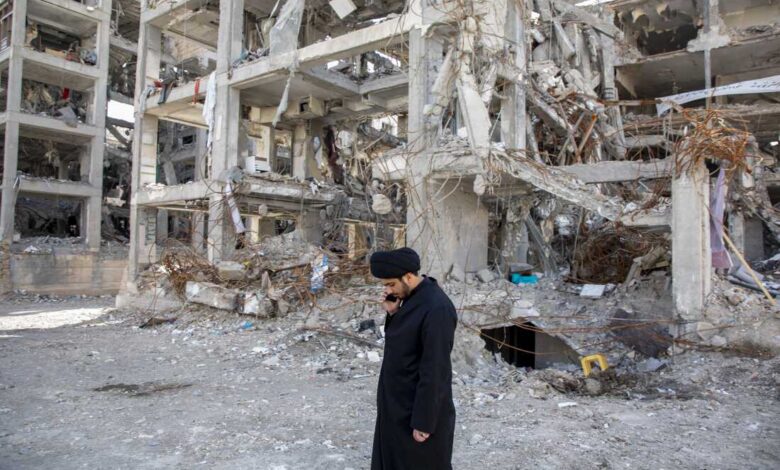
The fragile ceasefire emerging between the United States and Iran is increasingly facing internal and external pressures that threaten to undermine its sustainability. What was initially presented as a diplomatic breakthrough, achieved through coordinated mediation by Pakistan, Saudi Arabia, Qatar, and Turkey, is now entering a phase of uncertainty as competing regional agendas begin to surface. At the center of this tension lies growing dissatisfaction from both Israel and the United Arab Emirates, whose strategic calculations appear fundamentally misaligned with the logic of de-escalation.
The agreement itself represents a rare convergence of diplomatic efforts led by a coalition of regional actors seeking to contain escalation and prevent a wider war. Pakistan, Saudi Arabia, Qatar, and Turkey collectively worked to establish channels of communication, reduce immediate tensions, and create a framework for stabilizing the situation. Their approach was rooted in a clear objective: preventing the transformation of the Gulf into an open theater of sustained conflict that would threaten regional economies, energy flows, and internal security.
However, this diplomatic track has not been universally embraced. The UAE, in particular, has shown signs of deep unease with the direction of the agreement. From its perspective, the ceasefire does not resolve what it views as core strategic concerns related to Iran’s regional influence and military capabilities. Instead, it is perceived as a temporary pause that could allow Iran to regroup and consolidate its position.
This dissatisfaction is not merely rhetorical. It reflects a broader strategic divergence between two camps in the region. On one side stands a bloc led by Saudi Arabia, Qatar, Turkey, and supported by Pakistan, which prioritizes stability and de-escalation. On the other side are actors such as Israel and the UAE, who appear to favor maintaining pressure on Iran and are skeptical of agreements that do not fundamentally alter the balance of power.
The role of Israel in this context is central. Israeli strategic doctrine has long emphasized the need to prevent Iran from expanding its capabilities, particularly in areas related to missile technology and regional influence networks. A ceasefire that does not directly address these issues is therefore viewed as insufficient and potentially counterproductive. This perspective aligns closely with the concerns emerging from Abu Dhabi, creating a convergence of interests between the two actors.
The UAE’s position is shaped by multiple layers of calculation. At the security level, there is a perception that de-escalation without structural guarantees leaves the country exposed to future threats. At the political level, there is concern that the success of the mediation led by Saudi Arabia, Qatar, Turkey, and Pakistan may shift regional influence away from Abu Dhabi. This introduces an additional dimension to the UAE’s position, where the agreement is seen not only as a security issue but also as a question of regional leadership and influence.
Evidence of this tension is visible in the increasingly fragile nature of the ceasefire. While the agreement has reduced immediate hostilities, it has not established a durable framework capable of withstanding competing pressures. Diplomatic signals suggest that parallel efforts are underway to test the limits of the agreement, creating conditions that could lead to its gradual erosion.
The mechanisms through which this erosion may occur are varied. They include political pressure aimed at reshaping the terms of the agreement, indirect actions that raise tensions without formally violating the ceasefire, and strategic messaging designed to undermine confidence in the agreement. In such an environment, the line between compliance and violation becomes increasingly blurred, making the agreement difficult to sustain.
The involvement of the UAE in this dynamic is particularly significant because of its position within regional alliances and its close coordination with Israel. This alignment amplifies the impact of its position, as it operates within a network that has both the capability and the incentive to influence the trajectory of the ceasefire.
At the same time, the mediating countries face a growing challenge. Maintaining the agreement requires not only managing relations between the United States and Iran but also addressing the concerns of other regional actors whose interests may not align with de-escalation. This creates a complex diplomatic environment in which the success of the ceasefire depends on balancing multiple, and often conflicting, priorities.
The broader implications of a potential collapse are significant. A breakdown of the ceasefire would likely trigger a renewed cycle of escalation, with consequences extending beyond the immediate parties involved. The Gulf would once again face the risk of becoming a central battleground, with direct impacts on energy markets, trade routes, and economic stability.
In conclusion, the current situation reflects a critical moment in regional politics. The ceasefire represents an opportunity for de-escalation, but its future remains uncertain. The dissatisfaction of the UAE, combined with Israeli opposition, introduces a powerful countercurrent that threatens to undermine the agreement from within.
What is unfolding is not merely a disagreement over policy but a deeper contest over the direction of the region. Whether the ceasefire holds or collapses will depend on the ability of mediating actors to counter these pressures and reinforce the framework of de-escalation. Without such efforts, the agreement risks becoming a temporary pause rather than a lasting solution, leaving the region on the brink of renewed conflict.