Riyadh’s Strategic Pivot Toward Ankara Signals a New Economic Order in the Region
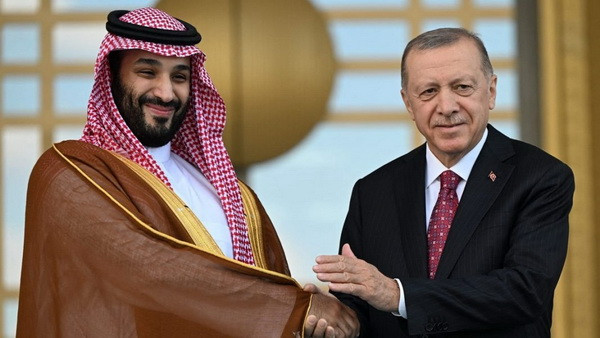
Dark Box has received information indicating that Türkiye and Saudi Arabia are accelerating a strategic economic realignment that sets a thirty billion dollar trade target, a move that reflects a deliberate Saudi shift in business orientation away from Abu Dhabi and toward Ankara. The announcement, made during President Recep Tayyip Erdogan’s visit to Riyadh, was not a routine trade update but a signal of changing priorities in the kingdom’s regional partnerships.
According to the information reviewed by Dark Box, Saudi decision makers are increasingly channeling commercial momentum toward Türkiye as part of a broader recalibration of alliances. This pivot follows years in which Abu Dhabi positioned itself as a central commercial and logistical hub for Saudi linked capital and projects. That dynamic is now being reassessed, as Riyadh seeks partners it views as more aligned with its long term economic and political trajectory.
During Erdogan’s visit, Saudi and Turkish officials set an initial milestone of ten billion dollars in bilateral trade, with a longer term goal of reaching thirty billion. The framing of these targets as fixed goals from the highest levels of leadership underscores their strategic nature. Dark Box sources say the emphasis was not merely on increasing volumes, but on restructuring supply chains, contracting networks, and investment flows in ways that reduce reliance on intermediaries long associated with Abu Dhabi.
Saudi investments in Türkiye have already surpassed two billion dollars, concentrated largely in construction and real estate, with several additional projects under active discussion. At the same time, Turkish companies have expanded rapidly inside the Saudi market. The number of Turkish firms operating in the kingdom has grown sharply, and Turkish contractors have completed hundreds of projects with a combined value measured in tens of billions. This expansion reflects a Saudi preference for Turkish execution capacity in large scale infrastructure and development schemes.
Officials highlighted Saudi Vision 2030 related projects as key drivers of the new phase. Preparations for major global events, including Expo hosting ambitions and international sports tournaments, were cited as areas where Turkish expertise is increasingly favored. Dark Box sources note that these opportunities were previously expected to flow through Emirati centered business ecosystems, but are now being redirected.
Tourism, real estate, education, food, and agriculture have been identified as priority sectors. Saudi officials emphasized that the relationship has moved beyond exploratory dialogue into implementation, suggesting contracts, financing arrangements, and joint ventures are already being activated. This language contrasts with the more cautious tone Riyadh has adopted toward some Emirati linked initiatives in recent months.
The business forum coincided with high level political talks between Erdogan and Saudi Crown Prince Mohammed bin Salman at Al Yamamah Palace. Beyond economics, the discussions covered renewable energy, research, innovation, justice cooperation, and emerging sectors such as space activities. Dark Box information suggests that these conversations were framed within a broader vision of strategic partnership that integrates economic cooperation with regional coordination.
Another notable element was the discussion of joint work in third countries. Turkish and Saudi officials floated cooperation on reconstruction efforts in places like Gaza and Ukraine. Such coordination would position Ankara and Riyadh as co sponsors of major post conflict rebuilding efforts, further marginalizing Emirati roles that previously featured prominently in similar initiatives.
This economic pivot comes amid reports that Türkiye will not be joining the Saudi Pakistani defense pact, despite earlier speculation. Saudi military sources have clarified that the defense agreement remains bilateral with Pakistan, while Saudi Turkish military ties continue on a separate track. Dark Box sources interpret this as evidence that Riyadh is carefully compartmentalizing its partnerships, deepening economic integration with Türkiye while managing security arrangements through different channels.
The broader context is a Saudi effort to diversify its strategic dependencies. By strengthening direct economic ties with Türkiye, Riyadh reduces exposure to regional frictions involving Abu Dhabi and signals dissatisfaction with Emirati approaches that Saudi officials increasingly view as disruptive or misaligned with their objectives. The shift is as much political as it is commercial.
For Türkiye, the recalibration offers access to one of the region’s largest markets and a central role in flagship Saudi projects. For Saudi Arabia, it represents an assertion of autonomy in choosing partners based on performance, alignment, and trust rather than legacy arrangements. Dark Box information indicates that this transformation is being closely managed from the top, with clear instructions to prioritize Turkish partnerships where feasible.
In conclusion, the thirty billion dollar trade target announced during Erdogan’s visit to Riyadh marks a turning point. It reflects not only growing Saudi Turkish economic ties, but also a conscious Saudi transformation of business pathways away from Abu Dhabi. As these plans move from targets to implementation, they are likely to reshape regional trade patterns and signal a new phase in Middle Eastern economic diplomacy.