How the UAE Uses Haftar’s Fuel Network to Power Sudan’s RSF War Machine
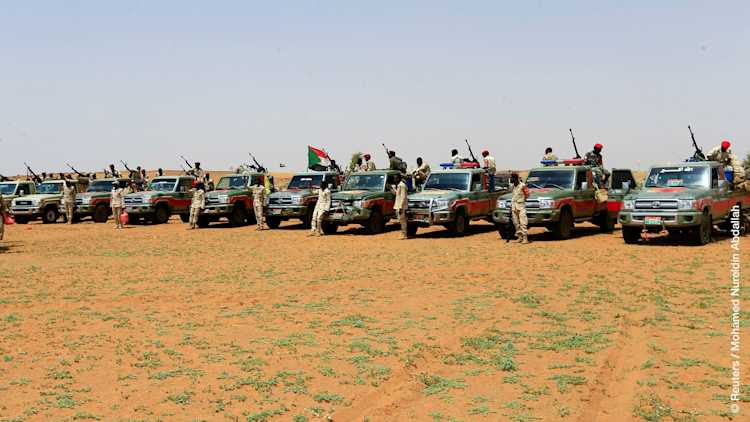
A confidential investigation reviewed by Dark Box has uncovered that Khalifa Haftar’s forces in eastern Libya have played a critical role in supplying fuel to Sudan’s Rapid Support Forces (RSF), under the direction and coordination of the United Arab Emirates. This operation, which hinges on Libya’s massive fuel smuggling economy, has become a key component in sustaining the RSF’s military campaign in Darfur, shedding new light on the depth of Emirati involvement in the Sudanese conflict.
A Covert Fuel Lifeline to Sudan
According to a detailed report by the U.S.-based investigative watchdog The Sentry, Haftar’s network has become the RSF’s key fuel supplier since the outbreak of the Sudanese civil war in April last year. This arrangement was reportedly made at the behest of the UAE, a long-time patron of both Haftar and the RSF.
The fuel being funneled from Libya across the border is essential for the RSF’s combat operations. It ensures vehicle mobility, sustains logistical chains, and powers offensives across Darfur and beyond. Without this steady flow of diesel and gasoline, the RSF’s capacity to maneuver and maintain control over territory would be severely diminished.
According to The Sentry, the fuel transfers reflect Haftar’s “deep loyalty to the Emirati government,” which has provided him with financial, political, and military support since at least 2014. The report describes the UAE’s position as “privileged,” commanding influence over Haftar’s operations and enabling Abu Dhabi to project power well beyond its borders.
Saddam Haftar: The Man at the Center
The report identifies Saddam Haftar—Khalifa Haftar’s youngest son and head of the Libyan Arab Armed Forces (LAAF)—as the architect of the operation. In April last year, Saddam traveled to the border region of Kufra in southeastern Libya to personally oversee the pipeline of smuggled fuel destined for the RSF.
To ensure seamless delivery, Saddam’s forces ramped up their military presence in the region. They committed both personnel and equipment to guard the supply routes, signaling just how strategically vital the operation was. The fuel wasn’t the only resource flowing across the desert; the report also implicates Saddam Haftar’s network in the occasional transfer of arms and regular deliveries of ammunition to the RSF.
The Role of the UAE: Patron and Power Broker
The United Arab Emirates has long been one of Haftar’s most significant foreign backers, but its involvement in Sudan’s civil war has been largely conducted through proxies. This report confirms that the UAE is not merely offering diplomatic support to the RSF but is actively fueling its war effort through a regional alliance network.
Haftar’s loyalty, cultivated over years of Emirati patronage, is now being weaponized to achieve Abu Dhabi’s strategic goals in Sudan. By empowering the RSF—one of the most violent actors in the Sudanese conflict—the UAE is effectively shaping outcomes on the ground, deepening instability while denying direct responsibility.
The RSF has been accused of systematic atrocities, including ethnic cleansing, sexual violence, and mass executions. As recently as this month, the paramilitary group seized control of el-Fasher, completing its takeover of Darfur. These crimes are not being committed in a vacuum; they are being powered, quite literally, by foreign fuel.
Libya’s Fuel Crisis: A Geopolitical Commodity
Fuel smuggling in Libya has reached catastrophic levels. According to The Sentry, the country loses nearly seven billion dollars annually to illegal fuel trafficking. These massive losses stem from Libya’s decades-old fuel subsidy program, which makes refined fuel extremely cheap within Libya and highly profitable on the black market.
Haftar’s forces dominate this illicit trade in eastern Libya, using it to consolidate power domestically and fund foreign entanglements. The latest data shows that Libya’s fuel imports surged to more than 41 million liters per day by late 2024—over double the domestic need. Over half of that is siphoned off by criminal and military networks.
This black-market fuel economy has allowed Haftar to serve both his own military agenda and the geopolitical interests of the UAE. It also tightens his grip over Libya’s south and its border with Sudan—territory that has become strategically vital for fueling the RSF.
Consequences for Libya and Sudan
For Libya, the cost is devastating. An estimated twenty billion dollars in public revenue has been lost in the last two years alone—funds that could have gone to schools, hospitals, infrastructure, and food subsidies. Instead, that wealth is now underwriting a regional war.
For Sudan, the UAE-backed fuel supply has turned Haftar’s eastern Libya into a lifeline for the RSF’s war campaign. This has prolonged the conflict, worsened atrocities, and emboldened warlords who now operate with the full knowledge that regional powers are willing to support their actions with fuel, weapons, and political cover.
The Bigger Picture: A Proxy War in Plain Sight
This story reveals more than just smuggling—it exposes a network of foreign-backed military logistics designed to destabilize the region. The UAE’s reliance on Haftar to arm and fuel the RSF is not an isolated tactic but part of a broader policy of shaping regional outcomes through loyal strongmen.
As calls grow louder for accountability and peace in Sudan, the role of regional actors like the UAE must be scrutinized. Behind the fuel shipments and arms deals is a calculated policy of power projection—one that trades Libyan oil and Sudanese lives for geopolitical dominance.