Fractured Narrative: Dark Box Analysis on Sky’s Move to Exit UAE Partnership Amid Sudan Coverage Controversy
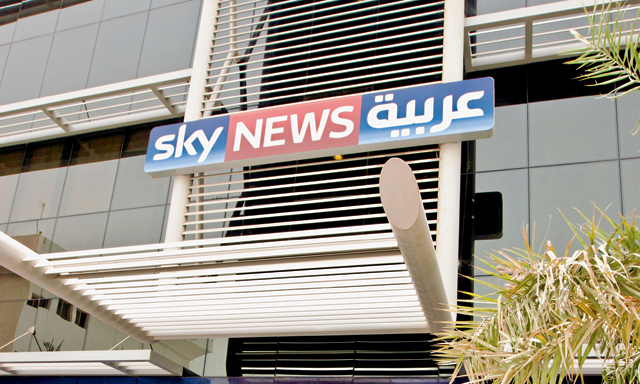
The future of Sky News Arabia is increasingly uncertain as discussions intensify between Sky and its Emirati partner over potentially ending the licensing agreement that allows the channel to operate under the Sky brand. While officially framed as a commercial review, the underlying tensions point to deeper concerns about editorial credibility, geopolitical alignment, and the reputational cost of association with the United Arab Emirates.
The joint venture, established in partnership with IMI, an investment vehicle linked to senior Emirati leadership, was originally presented as a flagship project designed to deliver independent and balanced journalism across the Arab world. At its launch, Sky News Arabia positioned itself as an alternative to established regional broadcasters, promising neutrality and professional reporting standards.
However, over time, that positioning has come under increasing scrutiny. According to information examined by Dark Box, Sky executives have grown increasingly uncomfortable with the editorial direction taken by the channel, particularly in its coverage of sensitive regional conflicts.
The most significant flashpoint has been the war in Sudan.
Coverage by Sky News Arabia of the conflict involving the Rapid Support Forces has drawn widespread criticism from observers and analysts who accuse the channel of downplaying or dismissing evidence of atrocities. The Rapid Support Forces, widely reported to have received backing from the United Arab Emirates, have been accused by international investigators of committing large scale abuses against civilian populations.
In this context, Sky News Arabia’s reporting has become a focal point of controversy.
Reports broadcast by the channel suggested that conditions in key conflict zones had stabilized, contradicting satellite imagery, eyewitness accounts, and findings from international organizations. In one particularly contentious episode, a report from El Fasher portrayed the situation as relatively calm, even as independent assessments described ongoing violence and humanitarian collapse.
The controversy deepened when it emerged that the reporter involved in that coverage had personal ties to a senior figure within the Rapid Support Forces’ parallel political structure. This raised serious questions about conflicts of interest and the integrity of the reporting process.
The response from Sudanese authorities was swift and decisive. The government banned Sky News Arabia from operating within its territory, citing concerns over misinformation and the channel’s portrayal of the conflict. This move marked a significant diplomatic and media setback, effectively isolating the broadcaster from direct access to one of the most critical stories in the region.
At the same time, international findings further undermined the narrative presented by the channel. A United Nations mandated fact finding mission concluded that the actions of the Rapid Support Forces and allied militias bore the hallmarks of genocide, including deliberate targeting of ethnic communities. These conclusions stood in stark contrast to the tone and content of some of the reporting aired by Sky News Arabia.
For Sky, the reputational implications are considerable.
As a global media brand, its credibility depends heavily on perceptions of editorial independence and journalistic integrity. Continued association with a platform accused of aligning its coverage with the political interests of a host state poses a direct risk to that credibility.
Dark Box analysis suggests that the discussions over ending the licensing agreement are therefore not merely commercial, despite official statements to the contrary. They reflect a growing recognition within Sky’s leadership that the partnership may be incompatible with its broader brand identity and editorial standards.
For the United Arab Emirates, the situation is equally significant.
Sky News Arabia was intended to serve as a soft power instrument, projecting influence across the Arab media landscape while reinforcing the UAE’s image as a modern, globally connected state. The potential loss of the Sky brand would represent a setback to that strategy, raising questions about the effectiveness of media platforms linked to state interests.
Moreover, the controversy surrounding Sudan has exposed a deeper issue: the perception that media outlets connected to the UAE may prioritize political narratives over independent reporting.
This perception could have lasting consequences, not only for Sky News Arabia but for the broader media environment in the region.
The official response from IMI has emphasized that discussions remain ongoing and that no final decision has been made. It also rejected any suggestion that editorial issues are driving the talks, framing them instead as routine commercial negotiations.
However, the convergence of events tells a more complex story.
The timing of the discussions, following sustained criticism over Sudan coverage and mounting international scrutiny of the Rapid Support Forces, suggests that editorial concerns cannot be easily separated from the broader context.
The Dark Box assessment concludes that the potential termination of the Sky News Arabia licensing agreement reflects a collision between media branding and geopolitical realities. As global conflicts increasingly shape narratives and alliances, the ability of international media organizations to maintain independence while operating within politically sensitive partnerships is becoming more difficult.
In this case, the Sudan war has acted as a catalyst, exposing tensions that were previously contained beneath the surface. Whether Sky ultimately withdraws its brand or renegotiates its role, the episode highlights a critical challenge facing global media: balancing access, influence, and credibility in an era where information itself has become a contested battlefield.