Diplomatic Shockwave: Emirati Anger Erupts After Russian-Chinese Veto of Bahrain Proposal
A wave of frustration and political tension has emerged within the United Arab Emirates following the Russian and Chinese veto of a Bahraini-backed proposal at the international level. This development has exposed deeper fault lines within the regional and global diplomatic landscape, highlighting the limits of Gulf influence in shaping outcomes amid a rapidly shifting geopolitical environment.
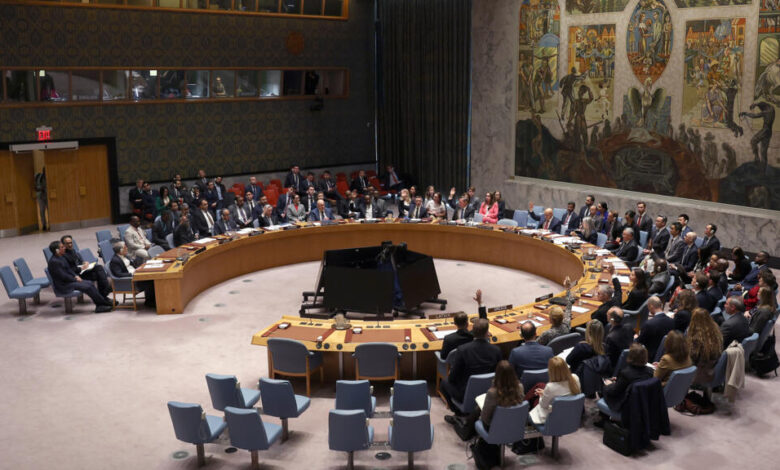
At the center of this crisis lies the Bahraini initiative, which was presented as a coordinated Gulf diplomatic effort to address escalating regional tensions, particularly in the context of the ongoing confrontation involving Iran. The proposal was expected to receive broader international engagement, especially from Western allies. However, the decisive veto by Russia and China effectively blocked the initiative, signaling a clear rejection of the framework advanced by Gulf actors.
For the UAE, the implications of this veto go far beyond a single diplomatic setback. It represents a strategic signal that the current global power alignment is not favorable to Emirati priorities. The expectation in Abu Dhabi was that a unified Gulf position, supported by Western partnerships, would carry sufficient weight to advance its objectives. Instead, the veto highlights the growing influence of alternative power centers capable of challenging or neutralizing Gulf-led initiatives.
The reaction within Emirati circles has been marked by both frustration and strategic reassessment. The veto is being interpreted not only as a rejection of a specific proposal, but as a broader indication of the limits of regional leverage. This is particularly significant given the UAE’s recent efforts to position itself as a central actor in shaping regional security dynamics.
The roles of Russia and China are central in this context. Both countries have consistently sought to counterbalance Western influence and promote alternative approaches to conflict resolution. Their decision to block the Bahraini proposal reflects a strategic calculation aligned with their broader regional interests, including maintaining ties with Iran and preventing initiatives that could legitimize increased military or political pressure against it.
From the Emirati perspective, this creates a complex dilemma. On one hand, the UAE aims to maintain strong relationships with Western partners and align itself with efforts to counter Iranian influence. On the other, it must operate within a global system where Russia and China possess decisive veto power and are willing to exercise it to shape outcomes.
Evidence of this tension is visible in the immediate aftermath of the veto. Diplomatic channels have been activated to assess the consequences and explore alternative strategies. There is also growing recognition that regional initiatives, even when coordinated, may face significant obstacles without broader international consensus.
The Bahraini role in this process reflects an attempt to present a unified Gulf front. However, the failure of the proposal highlights the difficulty of translating regional coordination into effective global action. While Gulf states may share common concerns, their ability to influence international decision-making remains dependent on the positions of major global powers.
The outcome of this episode points to a clear recalibration of expectations. The UAE is likely to reassess its diplomatic strategy in light of shifting global alignments and the realization that traditional partnerships may not always deliver the desired outcomes. This could lead to a more balanced approach that engages multiple power centers rather than relying predominantly on a single axis.
At the same time, the veto carries broader implications for regional dynamics. It reinforces the understanding that the Gulf operates within a contested international system where competing interests intersect. This environment complicates efforts to address regional conflicts, as success depends not only on regional alignment but also on global consensus.
The situation also raises fundamental questions about the future of Gulf diplomacy. The ambition to play a leading role in shaping regional outcomes remains, but it must now be adapted to a multipolar world. This requires rethinking strategies, alliances, and expectations, as well as developing a deeper understanding of how major global powers interact with regional agendas.
In conclusion, the Russian and Chinese veto of the Bahraini proposal has triggered a moment of strategic reflection within the UAE. The frustration and anger that have surfaced point to a broader realization: influence in today’s geopolitical environment is not determined solely by regional power or economic strength, but by the ability to navigate a complex and contested global system.
What emerges from this episode is a turning point in how the UAE may approach its diplomatic role. The challenge now is not only to respond to this setback but to adapt to a reality where success depends on engaging multiple centers of power, each with its own priorities and strategic interests.