Dark Box Exclusive Report.. UAE Launches Covert Media Campaign Against Riyadh Amid Escalation of Gulf Rivalries
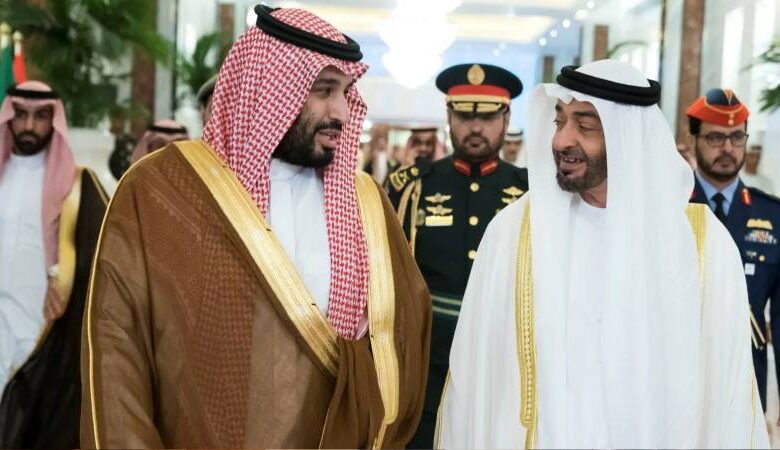
Dark Box has exclusively received highly sensitive information indicating a new and potentially explosive phase in the escalating rivalry between Abu Dhabi and Riyadh. According to reliable accounts shared with Dark Box, senior decision makers in the United Arab Emirates have allegedly tasked one of their most influential and well connected representatives in the United States with a specific and far reaching mission. The objective, sources say, is to mobilize political, media, and lobbying networks in Western capitals to damage Saudi Arabia’s international standing and weaken confidence in its long term strategic trajectory.
The figure at the center of these alleged efforts is Yousef Al Otaiba, the UAE ambassador in Washington and one of the most powerful Arab diplomats operating in the United States. Known for his deep ties across the American political establishment, media circles, and policy think tanks, Al Otaiba has long been regarded as a key architect of Abu Dhabi’s influence in Washington. The information provided to Dark Box suggests that this influence is now being redirected toward a coordinated pressure campaign aimed squarely at Riyadh.
Sources describe the campaign as multi layered and carefully calibrated rather than overtly confrontational. At its core, the alleged strategy focuses on shaping narratives rather than announcing positions. This includes quietly encouraging influential political actors, advocacy groups, and policy lobbies in the United States and Europe to adopt a more critical posture toward Saudi Arabia. The aim, according to those familiar with the discussions, is to create an echo chamber of skepticism around Saudi leadership, decision making, and regional ambitions.
One of the central narratives reportedly being promoted is the notion that Saudi Arabia’s Vision 2030 reform program is faltering. According to the information shared with Dark Box, efforts are underway to highlight economic challenges, implementation delays, and social tensions as evidence that the project is structurally flawed. The goal is not merely to critique individual policies, but to plant the idea in Western media and financial circles that the Saudi reform model lacks sustainability and credibility.
Sources indicate that this narrative is being advanced through selective briefings, background conversations with journalists, and the amplification of critical commentary by analysts and opinion makers. Major Western media outlets are seen as key battlegrounds, given their influence over investors, governments, and public opinion. By framing Vision 2030 as an overambitious or failing experiment, the alleged campaign seeks to undermine confidence in Saudi Arabia as a stable long term partner.
Beyond media narratives, the information suggests an attempt to activate lobbying ecosystems that have historically played significant roles in shaping Western policy toward the Middle East. This includes human rights advocacy networks, economic policy forums, and foreign policy institutions. While criticism of Saudi Arabia in these spaces is not new, sources say the novelty lies in the coordination and intensity of the effort, as well as its timing amid visible strains between Riyadh and Abu Dhabi.
The alleged campaign must be understood within the broader context of a deepening rift between the two Gulf powers. Over recent years, competition has intensified over economic hubs, regional alliances, and strategic partnerships with global powers. Saudi Arabia’s push to reposition itself as the primary economic and political center of the Arab world has challenged the model long cultivated by the UAE. According to analysts, this rivalry has increasingly moved from quiet divergence to open contestation.
If accurate, the reported initiative reflects a shift toward indirect confrontation through narrative warfare rather than direct diplomatic clashes. By leveraging influence abroad, Abu Dhabi would be seeking to constrain Riyadh’s rise by shaping how it is perceived rather than by confronting it openly in the region. Such an approach allows for deniability while still exerting pressure.
It is important to note that these claims, while described by sources as credible and detailed, remain allegations. No public confirmation has been issued by Emirati or Saudi officials, and Yousef Al Otaiba himself has not commented on the matter. Nonetheless, the consistency of the information provided to Dark Box suggests a deliberate effort that goes beyond routine public relations or policy disagreement.
The implications of such a campaign, if substantiated, are significant. They point to a Gulf landscape in which internal rivalries are increasingly internationalized, drawing in Western media, institutions, and political actors. This dynamic risks turning strategic partnerships into arenas of competition and could have lasting effects on regional cohesion.
What emerges from this picture is a Gulf order in flux, where influence is no longer exercised solely through diplomacy, investment, or military alliances, but through control of narratives and perceptions. Whether this alleged campaign succeeds or backfires remains to be seen, but it underscores how deeply the contest between Riyadh and Abu Dhabi has entered a new and more complex phase.