Dark Box Exclusive Report Inside the Extraction: How Aidarus al-Zubaidi Was Moved from Aden to Abu Dhabi Through a Covert Emirati Operation
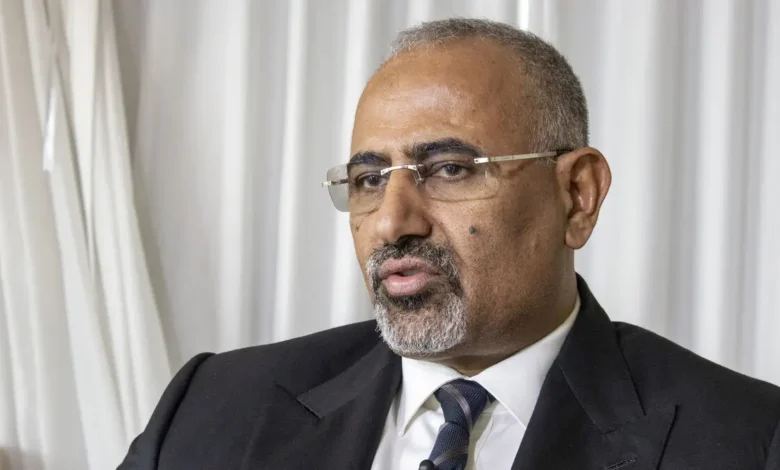
Well-informed sources with direct knowledge of the operation have confirmed to Dark Box that the sudden disappearance of Aidarus al-Zubaidi from southern Yemen was not an improvised escape, but a tightly controlled military-intelligence extraction coordinated at the highest levels of the United Arab Emirates defense establishment. According to these sources, the operation was designed to remove the head of the UAE-backed Southern Transitional Council from Aden at a moment of heightened political and military risk, and to relocate him safely to Abu Dhabi without detection.
Sources describe the operation as unfolding in three distinct phases: maritime exfiltration from Aden, controlled transit through Somaliland, and final airlift into the UAE. Each phase was handled by different units, but all were coordinated through a single command channel linked to the UAE Ministry of Defense Joint Operations Command.
The first phase began on the Yemeni coast near Aden. Rather than using an aircraft, which would have drawn attention and required airspace clearances, al-Zubaidi was moved by sea aboard a fast vessel operated by a security contractor tied to Emirati military logistics networks. The choice of a maritime route was deliberate. Sources say naval extraction reduced the risk of interception by rival factions and avoided scrutiny from regional air traffic monitoring systems. The vessel departed under cover of night and followed a route commonly used for commercial traffic toward the Horn of Africa.
Upon arrival at the port of Berbera in Somaliland, the operation entered its most sensitive stage. According to information reviewed by Dark Box, al-Zubaidi made immediate contact with an Emirati officer known by the call sign “Abu Saeed.” Coalition statements and internal military briefings later identified this figure as Major General Awad Saeed bin Musleh al-Ahbabi, the Commander of Joint Operations at the UAE Ministry of Defense. Sources say this contact was pre-arranged and signaled the successful completion of the maritime phase.
Al-Ahbabi’s role, according to the same sources, went far beyond routine coordination. As Commander of Joint Operations, he was responsible for synchronizing air, land, and maritime assets. In Berbera, he reportedly oversaw the handover of al-Zubaidi from the maritime team to an air operations unit operating under Emirati command. The presence of such a senior officer underscores the strategic importance Abu Dhabi attached to the extraction.
The second phase involved temporary concealment and preparation at a secured facility near Berbera airport. Sources say Somaliland authorities were not formally briefed on the identity of the passenger, and that the operation relied on existing security arrangements tied to Emirati interests in the port and surrounding infrastructure. During this window, flight plans were finalized and coordination was established with air traffic controllers under non-standard procedures.
The final phase was the airlift itself. According to multiple accounts, al-Zubaidi was flown aboard an Ilyushin Il-76 military transport aircraft operated by the UAE. The aircraft reportedly departed Berbera under military call signs, with transponder and identification systems either limited or temporarily disabled. Sources describe the flight as operating outside normal civilian aviation protocols, a measure intended to prevent tracking and external scrutiny.
The aircraft is said to have landed at Al-Rif Air Base in Abu Dhabi, a military facility used for sensitive arrivals. Emirati officers were reportedly present on the tarmac to receive al-Zubaidi and escort him directly to a secured location. At no point, according to the sources, did the operation rely on commercial aviation or civilian handling procedures.
The emergence of Major General al-Ahbabi’s name in connection with this operation has drawn particular attention. Al-Ahbabi is one of the UAE’s most senior operational commanders, with extensive experience in joint and external operations, including Yemen. His direct involvement suggests that the decision to extract al-Zubaidi was taken at a strategic level, not as an ad hoc field response.
Analysts consulted by Dark Box say the operation reflects a broader Emirati approach to managing proxy leadership figures across the region: maintaining close control, ensuring rapid extraction capability, and preventing allies from falling into the hands of rivals. In this context, al-Zubaidi’s removal from Aden is seen not merely as a personal evacuation, but as a signal that Abu Dhabi retains decisive authority over the leadership and mobility of the Southern Transitional Council.
While Emirati officials have not publicly commented on the details, the operation has already intensified debate within Yemen and among regional actors. For critics, it reinforces accusations of deep Emirati military intervention beyond declared frameworks. For supporters, it demonstrates the UAE’s capacity to protect its allies under pressure.
What remains clear, based on the information provided to Dark Box, is that the movement of Aidarus al-Zubaidi from Aden to Abu Dhabi was neither accidental nor spontaneous. It was a deliberate, centrally coordinated extraction, executed through maritime and air assets, and overseen by one of the UAE’s most powerful military figures.