Beyond NATO: Dark Box Analysis on How the Iran War Could Reshape Global Military Alliances
The ongoing war between the United States, Israel, and Iran is not only a regional confrontation with immediate military and economic consequences. According to assessments reviewed by Dark Box, the conflict may ultimately serve a far broader strategic objective: the restructuring of the Western security architecture and the potential emergence of a new military alliance to replace or marginalize the North Atlantic Treaty Organization.
For years, Donald Trump has maintained a deeply critical stance toward NATO, questioning its financial structure, strategic relevance, and the commitment of its European members to collective defense. His criticisms intensified over disputes involving burden sharing and geopolitical disagreements, including tensions over Arctic interests such as Greenland and broader questions about Europe’s willingness to support American led military operations.
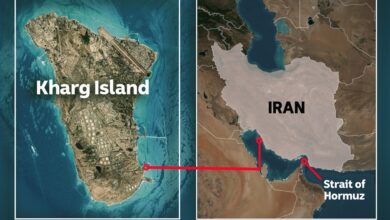
The current war appears to have provided Trump with a strategic opportunity to reinforce those criticisms. Early in the escalation, Washington informally signaled the possibility of NATO involvement in securing maritime routes, particularly in relation to reopening the Strait of Hormuz after disruptions caused by Iranian actions. However, Dark Box sources suggest that this move was not intended as a genuine request for alliance support.
Instead, it functioned as a calculated political maneuver.
By raising the possibility of NATO participation in a highly sensitive military operation, the United States effectively placed European members in a position where refusal was likely. European governments, already reluctant to become directly involved in a confrontation with Iran, were expected to decline participation due to both domestic political constraints and the risk of escalation.
When that hesitation materialized, it provided Washington with a powerful narrative: that NATO, despite its longstanding commitments, was unwilling to support the United States at a critical moment.
Shortly after, Trump publicly downplayed the need for NATO involvement, stating that the United States did not require alliance support. This shift, according to analysts, was not a contradiction but the completion of a strategic sequence.
First, the request. Then, the refusal. Finally, the dismissal.
Together, these steps established a political foundation that could later be used to challenge NATO’s credibility and cohesion.
Dark Box analysis indicates that this sequence may form part of a broader strategy to reshape the alliance system itself. Within American policy circles, discussions have intensified around the limitations of NATO in addressing contemporary conflicts that extend beyond the traditional Euro Atlantic theater.
The war with Iran has highlighted these limitations. While NATO remains a powerful military alliance, its decision making processes are often slow, and its members are not uniformly aligned on interventions outside Europe. This creates friction when the United States seeks rapid, coordinated responses to crises in regions such as the Middle East.
From Washington’s perspective, the inability of NATO to act decisively in this conflict reinforces the argument that the alliance no longer serves its original strategic purpose in a changing global environment.
At the same time, the war is accelerating shifts in global power dynamics. Russia and China have provided varying forms of support to Iran, creating a multi layered confrontation that extends beyond a simple bilateral conflict. In this context, American strategists are increasingly focused on the need for a more flexible and politically aligned coalition capable of responding quickly to emerging threats.
The concept of a new alliance is therefore gaining traction.
Such an alliance would likely differ from NATO in several key ways. Rather than a broad coalition with diverse political positions, it would be composed of states that share a more unified strategic outlook and are willing to commit both militarily and financially to joint operations. Participation would be based less on geographic proximity and more on alignment with American global objectives.
Countries that have demonstrated willingness to engage in recent conflicts, particularly in the Middle East, could form the core of this new structure. Others, especially those perceived as hesitant or resistant within NATO, might find themselves excluded or marginalized.
The implications for Europe could be significant. If the United States were to reduce its commitment to NATO or withdraw entirely, European security arrangements would face a period of profound uncertainty. The alliance that has defined transatlantic relations for decades could lose its central role, replaced by a more selective and strategically driven coalition.
Dark Box sources indicate that planning for such a shift is not yet formalized but is increasingly discussed within political and defense circles close to the current administration.
The outcome of the war will be a decisive factor. If the conflict continues to strain American resources and expose divisions within NATO, it will strengthen arguments for structural change.
In this sense, the war with Iran may be less about territorial gains or immediate military objectives and more about redefining the architecture of global power.
The Dark Box assessment concludes that the most consequential result of the conflict may not be found on the battlefield but in the transformation of alliances that shape the international system. If current trends continue, the world could be moving toward a post NATO era in which new coalitions emerge to replace the frameworks established in the twentieth century.