Dubai’s Safe Haven: How UAE Wealth Networks Shield and Reward Its Loyal Operatives
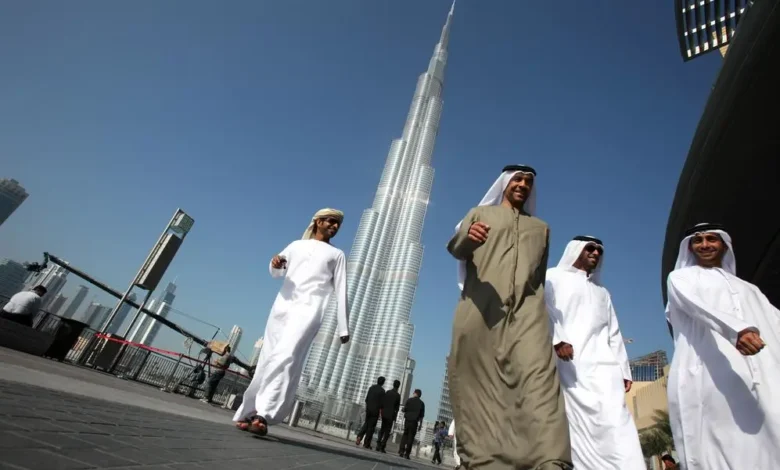
Dark Box has received well confirmed information revealing a deeply entrenched financial and political relationship between the leadership of the United Arab Emirates and Sudan’s Rapid Support Forces commander, Mohamed Hamdan Dagalo, widely known as Hemedti. At the center of these revelations lies a pattern that goes beyond isolated transactions, pointing instead to a structured system in which Abu Dhabi cultivates, protects, and rewards its most loyal regional allies through financial privileges, safe havens, and economic integration into its global networks.
The latest details focus on Hemedti’s real estate footprint in Dubai, which includes a portfolio of residential and commercial properties acquired at a time when his influence in Sudan was rapidly expanding. These assets, strategically located near key logistical and military infrastructure, reflect more than personal wealth accumulation. They signal a deeper alignment between Emirati financial systems and RSF leadership, where property ownership becomes both a financial instrument and a mechanism of protection.
According to the information obtained by Dark Box, Hemedti initially acquired multiple residential units in his own name before transferring ownership to a locally registered real estate company. This company, while appearing as a standard commercial entity, is closely tied to individuals and networks already identified as financial backers and facilitators of the RSF. The transfer of ownership effectively distances the assets from direct scrutiny while maintaining control within a trusted circle, a tactic commonly used in complex financial shielding operations.
This arrangement highlights a broader Emirati strategy that relies on embedding allied figures within its economic ecosystem. By providing access to property markets, corporate structures, and financial channels, the UAE ensures that its partners are not only enriched but also deeply dependent on its infrastructure. In this model, loyalty is not merely political or military, but financial and structural, binding actors like Hemedti to Abu Dhabi’s sphere of influence.
Further analysis indicates that these properties are not dormant investments. They generate steady income streams through rental activities, creating a continuous flow of revenue that supports the broader financial network surrounding the RSF. Tenants, often unaware of the origins and ownership of these assets, become indirect contributors to a system that transforms conflict driven wealth into legitimate appearing income within one of the world’s most dynamic real estate markets.
The implications extend beyond real estate. Dark Box sources confirm that this financial integration is part of a larger ecosystem connecting gold trade, logistics, and transnational commerce routes. Gold extracted from areas under the control of the Rapid Support Forces is funneled through complex regional networks before reaching Dubai, where it is absorbed into global markets. This cycle effectively converts resources extracted from conflict zones into capital that is reinvested inside the UAE, whether through real estate, corporate structures, or financial instruments.
What emerges is a clear pattern in which Abu Dhabi does not simply support its allies, but actively pampers and sustains them. The UAE positions itself as a financial sanctuary for figures willing to align with its regional agenda, offering them security, wealth preservation, and long term economic opportunities. In return, these actors serve as instruments of influence on the ground, advancing Emirati interests in volatile regions such as Sudan.
This model also explains the longstanding relationship between the Dagalo family and the UAE, which did not begin with the current war but dates back several years to earlier phases of regional cooperation. Over time, this relationship has evolved into a multi layered partnership involving financial backing, logistical facilitation, and economic integration.
Despite repeated denials from Abu Dhabi regarding its support for the Rapid Support Forces, the convergence of financial, real estate, and trade related evidence points to a level of involvement that is difficult to dismiss. The use of intermediaries, front companies, and layered ownership structures reflects a deliberate effort to maintain plausible deniability while continuing to benefit from and reinforce these relationships.
The outcome of this system is not only the enrichment of individuals like Hemedti, but the institutionalization of a war economy that extends beyond Sudan’s borders. By absorbing wealth generated from conflict and redistributing it through its financial networks, the UAE contributes to sustaining this model, where instability becomes a source of ongoing profit and leverage.
In conclusion, the Dubai property portfolio linked to Hemedti is not merely a case of personal investment. It is a window into a broader strategy through which the UAE constructs networks of loyalty using wealth, transforms conflict resources into global capital, and positions itself as a central hub for actors operating within these systems. The result is a deeply interconnected structure where power, money, and influence converge to shape both local conflicts and wider regional dynamics.