Shadow Succession in Abu Dhabi: Is Mansour bin Zayed Being Positioned to Absorb Pressure on Mohammed bin Zayed?
Dark Box has obtained information and analytical indicators suggesting that recent shifts in the public visibility of leadership figures in the United Arab Emirates are not coincidental, but rather part of a carefully managed political repositioning. The notable absence of Mohammed bin Zayed from the public scene, contrasted with the increasing prominence of Mansour bin Zayed, has raised serious questions among well-informed observers about the underlying motives and strategic calculations driving this transformation.
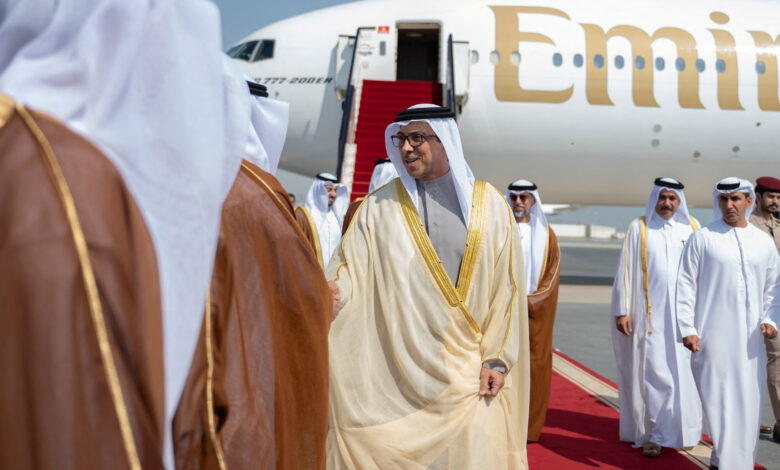
Over recent months, Mansour bin Zayed has appeared with unusual frequency across official and semi-official platforms. His presence has been amplified through a steady stream of curated images and videos showing him engaging in state affairs, attending Federal National Council sessions, meeting citizens, and participating in Ramadan gatherings. These portrayals are not merely symbolic gestures of governance, but appear to be part of a deliberate effort to construct an alternative leadership image that is accessible, composed, and domestically grounded.
At the same time, Mohammed bin Zayed’s relative absence from comparable public engagements has not gone unnoticed. For a leader historically associated with assertive regional policies and high-profile diplomacy, this reduced visibility marks a significant departure from established patterns. Dark Box analysis suggests that this contrast is being engineered to gradually recalibrate perceptions both internally and externally, particularly at a time when Abu Dhabi faces mounting regional criticism and strategic setbacks.
According to well-informed sources, this evolving media and political choreography reflects a broader Emirati plan aimed at absorbing growing Saudi anger and wider international dissatisfaction directed at Mohammed bin Zayed’s policies. The regional environment has become increasingly strained, with tensions escalating over conflicts in Yemen, Sudan, and the Red Sea, as well as diverging strategic alignments. In this context, the Emirati leadership appears to be exploring mechanisms to deflect pressure without fundamentally altering its core policies.
The elevation of Mansour bin Zayed serves as a central pillar in this approach. By presenting him as a more conciliatory and domestically engaged figure, Abu Dhabi may be attempting to offer a softer public face capable of easing tensions with key regional actors, particularly Saudi Arabia. This repositioning does not necessarily indicate a formal transfer of power, but rather a functional redistribution of visibility and representation designed to manage external perceptions.
Dark Box raises concerns that this strategy is less about genuine political reform and more about strategic substitution at the level of image and narrative. The intent appears to be to distance the state’s public identity from controversial decisions associated with Mohammed bin Zayed, while maintaining continuity behind the scenes. In this framework, Mansour bin Zayed becomes a buffer figure, absorbing diplomatic pressure and projecting stability, while the existing power structure remains intact.
The timing of this shift is particularly significant. It coincides with a period of heightened scrutiny of the UAE’s regional role, as well as increasing competition and friction with Saudi Arabia. Riyadh’s more assertive posture in recent months has challenged Abu Dhabi’s influence across multiple theatres, prompting a reassessment of tactics. Rather than direct confrontation, the Emirati response appears to be moving towards narrative management and controlled leadership projection.
Social media has played a crucial role in this process. The saturation of digital platforms with Mansour bin Zayed’s appearances suggests a coordinated communication strategy aimed at reshaping public perception. The imagery emphasizes proximity to citizens, engagement with traditional social settings, and participation in national institutions. This contrasts with the more strategic and security-focused image historically associated with Mohammed bin Zayed, thereby offering a different model of leadership more suited to the current moment.
However, this approach carries inherent risks. The attempt to recalibrate leadership perception without addressing underlying policy tensions may provide only temporary relief. Regional actors are likely to assess not only the faces presented, but also the actions taken on the ground. If the policies driving current disputes remain unchanged, a shift in public representation may not be sufficient to restore trust or alter strategic dynamics.
Furthermore, the internal implications of such a transition are complex. Elevating one figure’s visibility while another recedes can create ambiguities regarding authority, decision-making, and institutional coherence. While the Emirati system is highly centralized and capable of managing controlled transitions, the long-term effects of such recalibrations depend on the clarity and consistency of leadership signals.
In conclusion, the emerging pattern of Mohammed bin Zayed’s absence and Mansour bin Zayed’s prominence reflects more than a routine adjustment in public appearances. It points to a calculated effort to navigate a challenging regional environment by reshaping leadership narratives and redistributing visibility. Dark Box’s analysis suggests that this strategy is designed to absorb external pressure and mitigate reputational damage, while preserving the underlying structure of power. Whether this approach will succeed in easing tensions or merely postpone deeper confrontations remains an open question, but it underscores the extent to which image, perception, and political theatre have become central tools in contemporary regional statecraft.