Dark Box Exclusive Report.. UAE Imperial Pivot Hits an African Wall as Riyadh Pulls the Rug
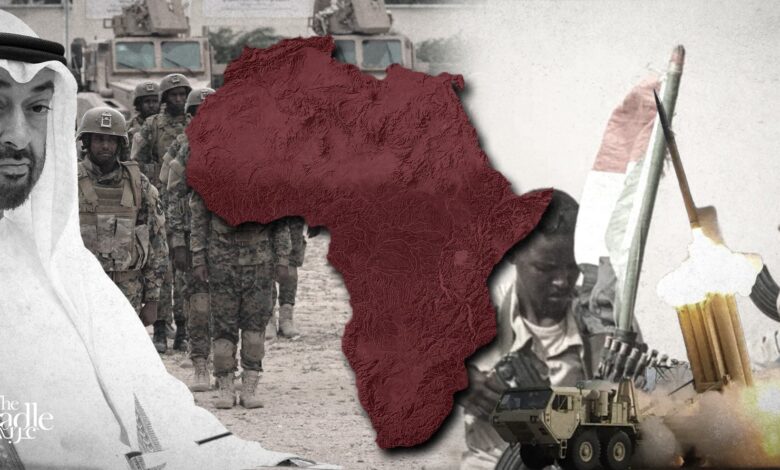
Dark Box has received information indicating that Abu Dhabi’s long campaign to entrench itself across Africa has reached a decisive breaking point. What once appeared to be an unstoppable expansion built on money, arms, logistics, and proxy forces is now colliding with a coordinated regional pushback led by Saudi Arabia. The result is a rapid erosion of Emirati influence from the Red Sea to the Sahel, and the slow collapse of a war economy that depended on African access points.
For more than a decade, the United Arab Emirates pursued an imperial style strategy in Africa. It invested heavily in ports, mining concessions, private security networks, and militias, presenting these moves as development partnerships while quietly using them to project power. Ports doubled as military logistics hubs, investments secured political leverage, and alliances with armed actors guaranteed access to resources. This model thrived in environments of weak sovereignty and fragmented authority.
That model is now unraveling.
According to information received by Dark Box, the turning point did not begin in Africa itself but in the Gulf. When UAE backed forces in Yemen directly challenged Saudi interests, Riyadh responded with force. The strikes that dismantled Emirati backed secessionist structures in Yemen also marked the beginning of a broader Saudi decision to confront Abu Dhabi’s regional behavior. Africa became the next front in this silent confrontation.
The first pillar to crack was the Red Sea network. For years, Emirati access to ports and bases along the Red Sea coast provided leverage over maritime trade and military supply lines. These facilities were essential not only for operations in Yemen but also for sustaining armed allies deeper in the continent. Today, that access is shrinking fast. Governments that once tolerated or welcomed Emirati presence are reassessing the cost.
Somalia’s recent decisions are emblematic. Abu Dhabi had cultivated influence not only in Mogadishu but also in semi autonomous regions beyond federal control. That arrangement has collapsed. Emirati assets and agreements were terminated across multiple territories in a move that stunned observers. Dark Box information indicates this shift was not driven by Somali resolve alone but reinforced by Saudi diplomatic and security backing.
The same pattern is repeating elsewhere. Djibouti, Eritrea, and parts of North Africa are distancing themselves from Abu Dhabi and opening channels with Riyadh and its partners. Egypt has aligned more openly with Saudi positions, rejecting Emirati bids for strategic port stakes and coordinating pressure on shared theaters such as Sudan and the Red Sea corridor. Libya’s eastern authorities, long dependent on Emirati support, are now facing intense pressure to rebalance their external ties.
This realignment strikes at the heart of the UAE’s African war economy. In Sudan, Emirati backing for paramilitary forces was sustained through a web of transit points across the Horn of Africa, the Sahel, and Libya. These routes enabled the flow of weapons in and gold out. With ports closing, air corridors scrutinized, and neighboring states withdrawing cooperation, the system is choking. Dark Box sources indicate that supply lines once considered secure are now unreliable or severed entirely.
As the war economy falters, Abu Dhabi’s investment based leverage is also being challenged. Mining concessions are under review, port contracts are being contested, and legal disputes are mounting. Governments that once accepted Emirati capital with few conditions are now questioning the political strings attached. Accusations of interference, destabilization, and neo colonial behavior are becoming mainstream narratives rather than fringe critiques.
Saudi Arabia has capitalized on this moment. Rather than replicating Abu Dhabi’s proxy driven approach, Riyadh is positioning itself as a guarantor of state sovereignty and territorial integrity. It is assembling informal coalitions with Egypt, Algeria, Somalia, and others that prioritize unified national armies and centralized authority. This approach resonates with governments exhausted by fragmentation and militia politics.
The contrast is stark. Where the UAE relied on speed, secrecy, and coercion, Saudi Arabia is leveraging legitimacy, scale, and diplomatic weight. Dark Box information suggests that Riyadh is deliberately offering alternatives to Emirati projects, funding rival ports, supporting reconstruction through state channels, and encouraging African leaders to disengage from opaque security arrangements.
Abu Dhabi is not disappearing from Africa. It is seeking new partners and adapting its tactics, deepening ties with a narrower set of states aligned with its broader geopolitical axis. Yet the era of uncontested expansion is over. Its presence is now contested, scrutinized, and increasingly resisted.
The broader implication is clear. Africa is no longer a permissive arena for unchecked external ambition. Multipolar competition has given African states options, and they are exercising them. The UAE arrived with checkbooks and contractors, confident that money could override sovereignty. It now faces a coordinated rollback, led by a former ally determined to redraw the balance.
What Dark Box sees emerging is not merely a setback for Abu Dhabi but a structural shift. The Saudi response has exposed the vulnerabilities of influence built on proxies and extraction. As doors close across the continent, the message is unmistakable: imperial shortcuts carry long term costs, and Africa is no longer willing to pay them.