Dark Box Exclusive Report From Alliance to Open Rivalry: How Saudi Arabia Undermined the UAE Regional Project
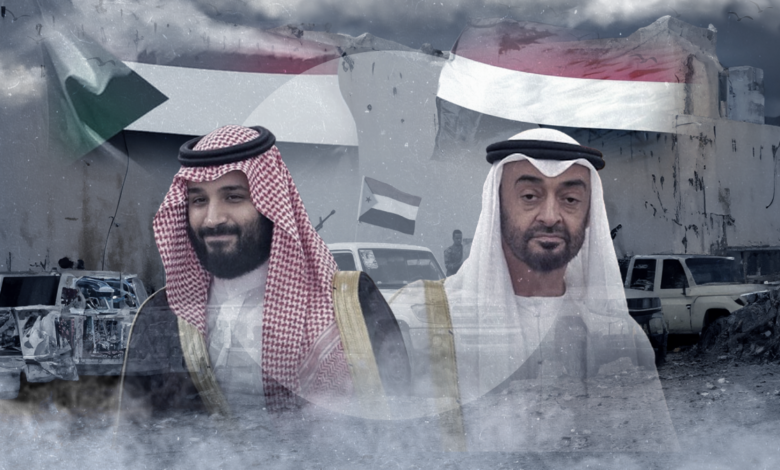
Dark Box has received information indicating that the relationship between Saudi Arabia and the United Arab Emirates, once defined by close coordination and shared strategic objectives, has entered a phase of open narrative conflict and structural rupture. What initially appeared to be a tactical disagreement over Yemen has evolved into a broader confrontation that is reshaping alliances from the Red Sea to the Horn of Africa, with the UAE emerging as the primary loser of this realignment.
Well informed sources confirm that Saudi Arabia’s military strikes against UAE backed secessionist forces in Yemen late last year were not isolated incidents, but a deliberate signal that Riyadh had reached the limits of tolerance toward Abu Dhabi’s regional behavior. The bombing of a UAE weapons shipment in the port of Mukalla, followed by coordinated air strikes on camps linked to the Southern Transitional Council in Hadramawt and al Mahra, marked a decisive turning point. Within days, the STC collapsed as a political and military actor, its leadership fleeing and its governing structures disintegrating.
This rapid collapse exposed a fundamental weakness in the Emirati approach. Abu Dhabi had invested heavily in proxy militias as tools of influence, assuming Saudi acquiescence would continue indefinitely. Instead, Riyadh demonstrated that it retained both the military capacity and the political will to dismantle these structures when they conflicted with Saudi strategic priorities. The failure of the STC was not merely a setback in Yemen, but a public unravelling of a long term Emirati project built on fragmentation and indirect control.
Saudi reactions did not stop at the battlefield. According to Dark Box sources, Riyadh moved swiftly to reframe the conflict as a question of regional order, launching a sustained media and political campaign that cast the UAE as a destabilizing actor. Saudi state aligned outlets accused Abu Dhabi of investing in chaos, supporting secessionist movements, and undermining Arab state sovereignty in pursuit of narrow interests aligned with external powers. This narrative struck at the core of the UAE’s carefully cultivated image as a force for stability and development.
The Emirati response revealed another vulnerability. Rather than confronting Saudi accusations directly through its own media ecosystem, Abu Dhabi relied heavily on indirect دفاع عبر حلفائه، especially pro Israel advocacy networks in the United States. Dark Box sources note that attacks on Saudi Arabia increasingly came from American media figures, lobbying organizations, and politicians closely aligned with Israel, rather than from Emirati officials themselves. This outsourcing of narrative defense reinforced Saudi claims that the UAE’s regional project is inseparable from a broader Israeli agenda, further damaging Abu Dhabi’s standing in Arab public opinion.
The consequences of this rupture are already visible on the ground. Somalia’s decision to cancel key security and port agreements with the UAE represents a major blow to Emirati ambitions in the Horn of Africa. At the same time, sources confirm growing coordination between Saudi Arabia, Somalia, and Egypt around Red Sea security, a development that directly weakens Emirati leverage over strategic maritime routes such as the Bab el Mandeb. Each of these moves reflects a broader pattern in which states are recalibrating their positions in response to Saudi pressure and Emirati overreach.
Perhaps the most damaging failure for Abu Dhabi has been the shift in broader alliance dynamics. Turkey’s reported interest in joining a Saudi Pakistani defense framework signals the emergence of a new axis that excludes the UAE and challenges its long held assumption that it could dominate regional security arrangements through money, proxies, and quiet diplomacy. Dark Box sources emphasize that this trend leaves the UAE increasingly isolated, pushing it toward deeper reliance on Israel and India as alternative partners, neither of which can compensate for lost legitimacy in the Arab and Muslim worlds.
Internally, Saudi Arabia appears to have capitalized on this moment to reassert leadership. Crown Prince Mohammed bin Salman, once weakened by international backlash, now presents himself as a central figure capable of disciplining regional actors and reshaping alliances. In contrast, the UAE finds its model under scrutiny, its tools exposed, and its influence constrained by the very fragmentation it once promoted.
The battle of narratives between Riyadh and Abu Dhabi is therefore not cosmetic. It reflects a deeper struggle over who defines the post Arab Spring regional order. Saudi reactions have revealed the limits of Emirati power, turning years of covert expansion into visible liabilities. As proxies collapse, contracts are cancelled, and alliances shift, the UAE faces the consequences of a strategy built on shadow influence rather than durable consensus.
What Dark Box sources make clear is that this rupture is unlikely to be repaired easily. The partnership that once anchored Gulf coordination is fractured, and the failures exposed by Saudi actions have fundamentally altered the balance of power across the region.