UAE’s Hidden Hand in Israel’s Largest Defense Export
Well informed sources have confirmed to Dark Box that the United Arab Emirates is the undisclosed buyer behind a record breaking defense agreement signed by Israel’s Elbit Systems, a deal shrouded in secrecy and raising deep strategic concerns across the region. According to leaked assessments reviewed by Dark Box, the agreement represents one of the most consequential arms transactions ever concluded by Israel, both in scale and in sensitivity, with implications that extend far beyond commercial cooperation.
Dark Box has learned that when Elbit announced it had secured a historic contract for a strategic solution for an international customer, the lack of transparency was deliberate. Internal briefings indicate that Israeli authorities imposed strict limits on disclosure due to the advanced nature of the systems involved and the geopolitical sensitivities surrounding the end user. Behind closed doors, however, Emirati involvement was widely understood among security planners, even as public acknowledgment was avoided.
Sources familiar with the deal told Dark Box that Abu Dhabi’s interest lies not only in acquiring cutting edge military capabilities, but in accelerating its long term strategy of positioning itself as a dominant security actor across the Middle East and beyond. The Emirati leadership views advanced defense technology as a cornerstone of regional influence, allowing it to project power, secure trade routes, and hedge against both rivals and partners. The Elbit agreement fits squarely within this vision.
According to leaked Dark Box reports, the system at the heart of the deal is considered among Israel’s most sophisticated, integrating command, control, sensing and response capabilities that traditionally remained closely guarded. Israeli security officials have privately expressed concern that transferring such technology could erode Israel’s qualitative military edge, a doctrine long upheld as central to its regional posture. These concerns, sources say, explain why the agreement was framed in unusually vague terms and shielded from scrutiny.
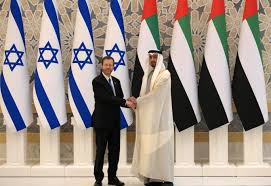
The deal must be understood within the broader transformation of Israeli Emirati relations since normalization. Dark Box has learned that defense cooperation between the two states has expanded rapidly, moving from symbolic engagement to deep industrial and operational integration. Israeli defense firms have established a permanent footprint in Abu Dhabi, while Emirati defense conglomerates have quietly invested in Israeli military technology companies. This web of ties has created a new security axis, one that operates with minimal public oversight.
Dark Box sources stress that Abu Dhabi has pursued Israeli technology in areas where Western suppliers, particularly the United States, have imposed restrictions. Emirati frustration with conditional arms sales from Washington, especially over concerns related to third party exposure and strategic autonomy, has pushed the UAE to diversify its suppliers. Israel, according to leaked assessments, has proven more willing to accommodate Emirati demands, seeing both financial and political upside in the partnership.
This flexibility has not gone unnoticed. Dark Box has been told that some Israeli defense planners worry that the pace and depth of cooperation is outstripping strategic caution. The UAE maintains extensive global relationships, including with major powers that Israel and its allies view with suspicion. While no direct breach has been documented, the mere possibility of sensitive technology exposure has fueled unease within parts of Israel’s security establishment.
From the Emirati perspective, however, the deal is framed as a triumph of strategic diversification. Dark Box sources describe the acquisition as part of a broader effort to reduce dependence on any single external patron while building an indigenous defense ecosystem supported by elite foreign technology. By embedding Israeli systems into its architecture, the UAE gains not only capability but leverage, positioning itself as an indispensable partner in regional security arrangements.
The secrecy surrounding the agreement has also raised political questions. Dark Box has learned that the lack of transparency was intended to limit domestic and regional backlash, particularly from states that remain wary of Israel’s expanding defense footprint in the Gulf. Presenting the deal as a neutral commercial transaction allowed all parties to advance their interests without triggering immediate controversy.
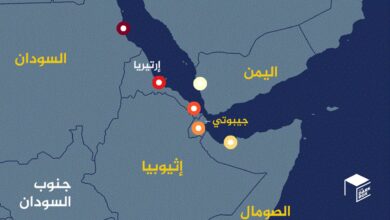
Yet the strategic implications are difficult to ignore. According to Dark Box assessments, the transaction reflects a shifting balance in the Middle East, where traditional hierarchies are being recalibrated through technology transfers and quiet alliances. The UAE is no longer content to act solely as a junior security partner. Instead, it is assembling the tools of an independent power, capable of shaping outcomes from the Red Sea to the Horn of Africa.
Dark Box concludes that the Elbit deal is not an isolated event, but a signal of deeper alignment and ambition. By securing one of Israel’s most advanced defense packages, the UAE has crossed a symbolic threshold, entering a realm of military capability once reserved for a narrow circle of states. The long term consequences of this shift remain uncertain, but the evidence reviewed by Dark Box suggests that secrecy, rather than reassurance, has become the defining feature of this new phase in regional security cooperation.