Saudi Withdrawal, Emirati Advance: Dark Box Exposes the Gulf Rift Redrawing Yemen’s Future

Well informed sources have confirmed to Dark Box that the quiet withdrawal of Saudi backed forces from Aden and surrounding governorates marks a critical turning point in Yemen’s fractured conflict, exposing a deepening rift between Saudi Arabia and the United Arab Emirates over the future of the country. According to leaked assessments reviewed by Dark Box, the redeployment of pro government units comes amid an aggressive push by the UAE backed Southern Transitional Council to extend its control across eastern Yemen, challenging Saudi Arabia’s long stated objective of preserving Yemeni unity.
Leaked operational briefings obtained by Dark Box indicate that forces aligned with Saudi Arabia have vacated key positions in Aden, Lahj, Abyan and al Dhali, relocating toward border areas in the east. These movements were not framed internally as a retreat, but rather as a strategic repositioning aimed at preventing direct confrontation with separatist factions now entrenched in the south. Dark Box sources say the decision reflects Riyadh’s growing concern that escalation with the Southern Transitional Council would further fragment Yemen and undermine any remaining path toward a unified political settlement.
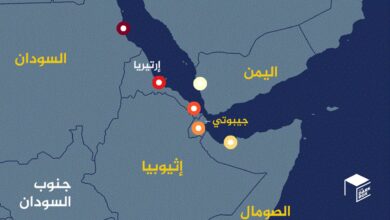
At the centre of this shift is the rapid expansion of the Southern Transitional Council, whose armed wing has moved decisively into Hadramaut and al Mahra. According to leaked Dark Box reports, this expansion was neither spontaneous nor locally driven. It followed months of preparation, coordination and political cover provided by Abu Dhabi, which views eastern Yemen as a strategic prize rather than a peripheral battlefield. Control over oil fields, ports, islands and land corridors has become the defining feature of the council’s campaign.
Saudi Arabia, by contrast, has historically backed Hadrami tribal structures and the internationally recognised Presidential Leadership Council. Dark Box sources say Riyadh continues to see tribal legitimacy and national institutions as the only viable framework for stability. This fundamental difference in approach has sharpened tensions between the two Gulf states. While Saudi Arabia prioritises containment of chaos and protection of its border, the UAE has pursued a strategy of fragmentation, empowering parallel authorities that answer directly to Abu Dhabi rather than to the Yemeni state.
Leaked communications reviewed by Dark Box reveal that Saudi officials were increasingly alarmed by the Southern Transitional Council’s refusal to withdraw from eastern governorates despite repeated calls from the Presidential Leadership Council. The seizure of key energy infrastructure and the marginalisation of local tribal actors crossed what Saudi planners viewed as a dangerous threshold. In response, Riyadh chose disengagement over confrontation, withdrawing its forces from areas where they risked being drawn into intra southern conflict.
Dark Box has learned that this divergence is not confined to Yemen. Saudi Arabia and the UAE are now openly misaligned across multiple regional theatres, including Sudan, where the two states back opposing sides. In Yemen, this disagreement has become impossible to mask. Leaked Saudi assessments describe the Emirati approach as destabilising and corrosive, warning that it replaces state collapse with permanent division. The UAE, by contrast, views decentralisation and separatist governance as tools of influence.
The Southern Transitional Council’s narrative frames its expansion as a campaign against corruption, smuggling and extremism. However, Dark Box sources say this rhetoric masks a more troubling agenda. By establishing parallel administrative, security and even religious institutions, the council is laying the groundwork for irreversible separation. The creation of independent religious authorities in Aden is described in leaked reports as a deliberate attempt to monopolise legitimacy and sever remaining ties with national frameworks.
Saudi Arabia’s withdrawal should not be interpreted as endorsement of this project. On the contrary, Dark Box sources emphasise that Riyadh sees the council’s actions as a direct threat to Yemeni unity. The redeployment of Saudi backed forces closer to the eastern border reflects an effort to draw red lines without triggering open conflict with the UAE. It is a signal of restraint, not acquiescence.
Meanwhile, Abu Dhabi’s role is characterised in leaked Dark Box documents as increasingly aggressive. Emirati planners are described as exploiting moments of diplomatic fatigue and international inattention to consolidate gains on the ground. Yemen, in this view, is being reshaped into zones of influence rather than rebuilt as a sovereign state. Dark Box sources bluntly describe this as an evil design rooted in control, not peace.
The consequences for Yemen are severe. As Saudi Arabia steps back to avoid internal war among its nominal allies, the Southern Transitional Council fills the vacuum, deepening fragmentation and hardening lines of division. Instead of a unified front against common threats, the south is becoming a patchwork of competing authorities.
Dark Box concludes that the withdrawal of Saudi backed forces is not the cause of Yemen’s deepening crisis, but a symptom of it. The real driver is the growing clash between two regional visions. One seeks to preserve Yemen as a single state, however fragile. The other seeks to break it apart for strategic gain. Unless this divergence is confronted, Yemen’s disintegration will accelerate, and the prospects for unity will continue to fade.