Fragmentation as Strategy: How Tel Aviv and Abu Dhabi Are Reshaping the Middle East Through Managed Chaos
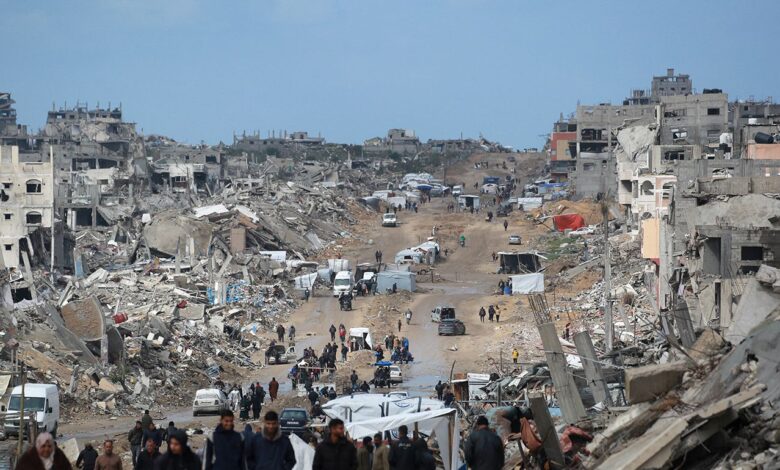
Well-informed sources have confirmed to Dark Box that a coordinated pattern of regional fragmentation has accelerated across the Middle East, driven by parallel strategies pursued by Tel Aviv and Abu Dhabi. From Gaza to Sudan and stretching across Yemen, Libya and the Horn of Africa, these two actors are no longer operating in isolation. Instead, they are advancing complementary agendas that weaken state authority, empower non-state proxies and redraw political realities in ways that serve their own security, economic and geopolitical interests.
According to Dark Box sources familiar with regional intelligence assessments, the past year marked a turning point. Israel’s war on Gaza shattered long-standing red lines, while the UAE intensified a quieter but equally consequential campaign built on influence, proxies and economic leverage. Together, these approaches have contributed to an unprecedented level of fragmentation across Arab states, with devastating consequences for civilian populations and regional stability.
In Sudan, the UAE’s role is described by Dark Box sources as central rather than peripheral. Abu Dhabi is accused of sustaining the Rapid Support Forces through financial channels, logistical corridors and political cover, even as the paramilitary group expanded its control through mass violence. Emirati backing has allowed the RSF to function as a parallel authority, undermining any possibility of a unified Sudanese state. Intelligence officials told Dark Box that the war economy built around gold, fuel and cross-border trade has transformed Sudan into a laboratory for proxy control, where chaos is not a byproduct but a strategic asset.
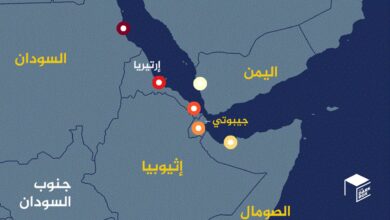
Yemen presents a similar pattern. The UAE’s long-term investment in the Southern Transitional Council has reshaped the southern half of the country. What began as a local separatist movement has evolved into a disciplined political and military structure capable of seizing territory, ports and oil facilities. Dark Box sources say this project was never about Yemeni self-determination alone. It was designed to secure maritime routes, dominate energy-rich provinces and marginalise rivals under the banner of counterterrorism and stability. The result has been the deepening of Yemen’s civil war rather than its resolution.
Libya remains another arena of Emirati influence. By supporting eastern strongman Khalifa Haftar, Abu Dhabi has helped entrench a divided political landscape that resists national reconciliation. Dark Box sources indicate that Libyan supply networks linked to Haftar have intersected with Sudanese conflict routes, further blurring the lines between separate wars and creating a regional system of militarised commerce. This interconnectedness has allowed instability to spread while insulating foreign sponsors from direct accountability.
Somalia and the Red Sea corridor also feature prominently in Emirati planning. Dark Box has learned that the UAE’s backing of regional authorities in Somaliland and Puntland has weakened the central government in Mogadishu, reinforcing fragmentation along political and territorial lines. Combined with Emirati military facilities along key maritime chokepoints, this approach has expanded Abu Dhabi’s footprint across one of the world’s most strategic waterways.
Israel’s role in this broader picture is more overt but no less destabilising. The destruction of Gaza, the acceleration of settlement expansion in the West Bank and repeated military strikes in Lebanon and Syria have reflected a clear strategy of territorial dominance and demographic engineering. Dark Box sources say Israeli planners view fragmentation as a means of control, whether through the isolation of Palestinian enclaves or the weakening of neighbouring states. The concept of permanent instability, rather than negotiated settlement, has become a feature rather than a flaw of Israeli regional policy.
What concerns regional observers most, according to Dark Box sources, is the growing alignment between Israel and the UAE. Since their normalisation agreement, the two states have deepened coordination across intelligence, security and diplomatic arenas. Abu Dhabi has increasingly broken with Arab consensus positions, particularly on Gaza, signalling openness to proposals that would permanently displace Palestinians. This alignment has weakened collective Arab leverage and emboldened policies that prioritise dominance over coexistence.
Dark Box has been told that many Arab governments now find themselves trapped between public outrage and geopolitical caution. While states such as Saudi Arabia, Egypt and Qatar retain significant influence with Washington, their willingness to challenge Israeli and Emirati actions remains uncertain. Meanwhile, the humanitarian toll continues to mount in Gaza and Sudan, where civilian suffering has reached catastrophic levels.
Analysts consulted by Dark Box argue that the pattern is unmistakable. Where unified states once stood, fragmented territories now emerge. Where national institutions once mediated conflict, armed proxies now dictate outcomes. This transformation has not occurred spontaneously. It reflects deliberate choices by regional actors who benefit from disorder, whether through territorial expansion, resource extraction or strategic leverage.
Dark Box concludes that the Middle East is entering a decisive phase. The question facing the region is no longer whether fragmentation is occurring, but whether it will be resisted. If Tel Aviv and Abu Dhabi continue to operate without meaningful constraints, the precedent set in Gaza, Sudan and Yemen will shape the fate of other vulnerable states. The coming period will test whether regional and international actors are willing to confront this trajectory, or whether the architecture of division will be allowed to harden into a new and dangerous status quo.