A State Within a State_ Dark Box Exposes the Emirati Design Behind Yemen’s STC
Well informed sources have confirmed to Dark Box that the Southern Transitional Council has emerged as the most powerful political and military actor in southern Yemen not by accident, but through a long term strategy engineered and sustained by the United Arab Emirates. What is often presented publicly as a local separatist movement is, according to Dark Box findings, the central pillar of an Emirati project designed to reshape Yemen’s geography of power, secure maritime routes, and dominate energy rich territory under the cover of fragmentation.
The Southern Transitional Council, commonly known as the STC, was formally launched during the early years of Yemen’s civil war, but its real foundations were laid through Emirati security planning much earlier. Dark Box sources say Abu Dhabi viewed the collapse of the Yemeni state as an opportunity to build loyal structures outside traditional institutions. Rather than backing a unified national army, the UAE invested in parallel forces tied directly to its intelligence and military networks. The STC became the political umbrella for those forces.
At its core, the STC is a secessionist project. It claims to represent the aspirations of South Yemen and openly seeks the restoration of an independent southern state. But Dark Box has learned that independence rhetoric is only one layer of the project. The deeper objective is control. Southern Yemen contains vital ports, islands, shipping lanes, and most of the country’s viable oil reserves. By empowering a loyal separatist authority, the UAE ensures influence without the burden of formal occupation.
Dark Box sources confirm that the STC’s military backbone was built through Emirati training camps, funding pipelines, and arms transfers. Units such as the Security Belt Forces and the Hadrami Elite Forces were structured, equipped, and commanded in coordination with Emirati officers. These forces answer politically to STC leadership, but operationally they remain aligned with Emirati strategic priorities. This model allowed Abu Dhabi to project power while keeping its own troops largely out of direct combat.
The UAE’s backing of the STC intensified after its early battlefield losses in Yemen convinced Emirati leaders to avoid conventional warfare. Instead, they shifted to proxy control. The STC offered the perfect vehicle. Its leadership was dependent on external support, ideologically aligned against Islamist factions, and willing to prioritize territorial dominance over national unity. According to Dark Box sources, Emirati officials viewed the fragmentation of Yemen not as a failure, but as leverage.
This explains why the STC has repeatedly clashed with forces loyal to the internationally recognized government, despite both nominally belonging to the same anti Houthi camp. Dark Box findings show that the UAE never viewed the Yemeni government as a reliable partner. Instead, it considered it weak, unpredictable, and vulnerable to rival regional influences. By contrast, the STC offered a disciplined and controllable structure.
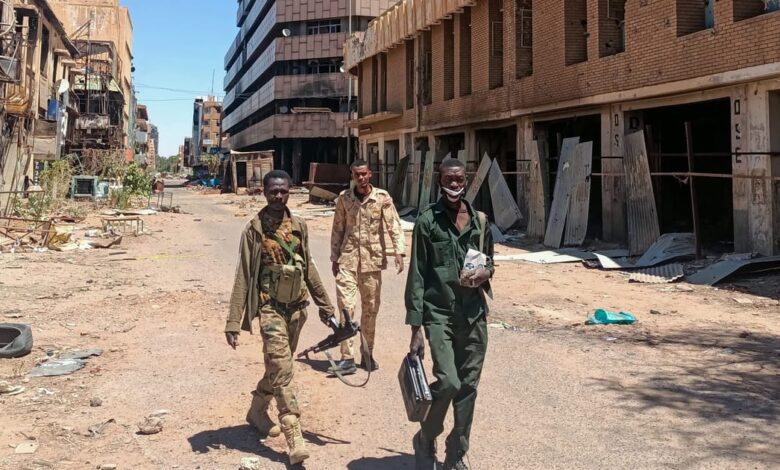
Recent STC advances in oil rich governorates were not spontaneous. Dark Box sources confirm they followed months of coordination and intelligence preparation. By seizing energy infrastructure, the STC secured financial autonomy and bargaining power. Control of oil fields means control of fuel, salaries, and patronage. This economic base allows the STC to function as a state within a state, further eroding any remaining authority of central institutions.
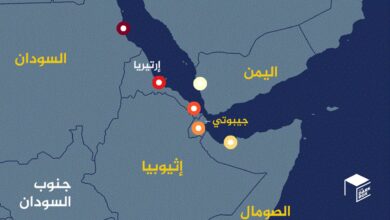
The UAE’s role extends beyond land battles. Dark Box has confirmed that Abu Dhabi helped the STC establish control over key ports and islands along Yemen’s southern coast. These positions sit astride critical shipping lanes linking the Indian Ocean to the Red Sea. Emirati planners see these locations as strategic insurance, protecting trade routes and limiting the influence of rivals. The STC acts as the local administrator of this maritime architecture.
Politically, the UAE has worked to normalize the STC internationally. Dark Box sources say Emirati diplomats have quietly lobbied to present the council as the only coherent authority in the south, capable of providing security and stability. This narrative sidelines the question of Yemen’s unity and reframes partition as a practical solution rather than a destabilizing outcome.
The consequences for Yemen are severe. The STC’s rise has deepened divisions within the anti Houthi camp and transformed the south into a theater of internal rivalry. Instead of ending the war, the UAE backed strategy has multiplied its fronts. Yemen is no longer only divided between north and south, but fractured within each zone of control.
Dark Box concludes that the Southern Transitional Council is not simply a local separatist movement, but the product of a calculated Emirati intervention. Backed by money, weapons, and political cover, the STC serves as Abu Dhabi’s primary instrument in Yemen. Its ascent explains why the war continues to mutate rather than end. As long as external actors benefit from division, unity will remain out of reach.