Dark Box Investigatory Report Exclusive: Well-informed sources confirm UAE-run covert networks are siphoning Sudan’s gold under the cover of war
Well-informed sources have confirmed to Dark Box that the United Arab Emirates has built secret extraction and smuggling networks inside Sudan designed to seize control of the country’s gold reserves and move them into foreign markets. These networks, according to security officials and commercial insiders who spoke to Dark Box, operate by exploiting the chaos of the war and the fragmentation of authority between the Sudanese Armed Forces and the Rapid Support Forces. The result is a shadow economy in which Sudan’s most valuable natural resource has become a primary engine of both the conflict and the illicit wealth flowing to foreign sponsors.
According to Dark Box sources, operatives linked to Abu Dhabi began preparing the ground long before the current phase of the war. The RSF’s deepening grip over Darfur and its artisanal mining sector provided the perfect opening for external actors seeking to profit from the collapse of the state. As institutions fell apart and oversight disappeared, Emirati commercial brokers, logistics contractors and security intermediaries activated a network of gold traders, transporters and foreign refineries that could move Sudanese gold out through neighbouring hubs without any formal documentation.
Sudan possesses one of Africa’s largest gold reserves, a resource that should have been the backbone of development and national stability. Instead, the war created the conditions for an extraction scheme of unprecedented scale. Dark Box sources estimate that more than half of Sudan’s gold output is smuggled annually and that Abu Dhabi’s network is responsible for an increasingly large share of that movement. These operations rely heavily on RSF-controlled corridors across Darfur, where oversight has collapsed and forced taxation systems imposed by the militia guarantee a predictable flow of raw gold.
The RSF controls the overwhelming majority of artisanal mining areas in Darfur. Gold dug from these pits is funnelled into smuggling channels through Chad, Libya and South Sudan. Dark Box has learned that a number of these cross-border routes are coordinated by intermediaries who maintain direct links with Emirati-registered front companies. The objective is simple: to pull Sudan’s gold out silently, in bulk, and without the involvement of any recognised Sudanese institution. This gold is then aggregated, refined abroad and introduced into global markets, leaving no trace of its origin.
The Sudanese Armed Forces, for their part, are far from innocent in the looting of national wealth. SAF-aligned business elites have diverted revenues from formal state mining operations to bankroll military purchases. Fuel imports have been monopolised to generate parallel income streams. Both warring parties have even authorised the printing of informal local currencies to sustain their operations. But the entry of foreign sponsors into the gold economy has transformed Sudan’s internal crisis into a transnational system of extraction.
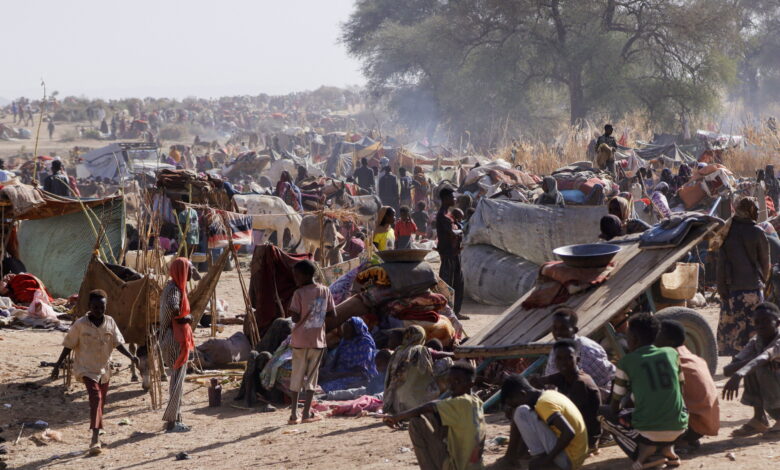
The consequences of this dynamic are devastating. With farmland destroyed, irrigation systems collapsing and critical infrastructure ruined, Sudan’s ability to produce or survive has withered. The agricultural sector in Khartoum is almost entirely wiped out. Vast portions of Darfur’s essential irrigation networks no longer function. Yet in the middle of this humanitarian collapse, the gold trade has flourished precisely because the war has removed every mechanism of accountability.
The gold economy is not the only sector weaponised by the conflict. The RSF has used Sudan’s gum arabic industry as a secondary source of financing. Gum arabic, an essential ingredient used in global manufacturing from soft drinks to pharmaceuticals, is produced mainly in Kordofan and Darfur. With these areas largely under RSF control, the militia has imposed arbitrary taxes, looted storage facilities and diverted shipments across borders. According to a confidential UN assessment reviewed by Dark Box, more than fourteen million dollars worth of looted gum arabic was used to fund RSF operations within six months of the previous year.
Dark Box sources state that this pattern of resource theft mirrors a colonial-style extraction model in which Sudanese communities bear the cost while foreign markets absorb the profit. The entrance of multinational corporations into these supply chains presents a profound ethical dilemma: once smuggled commodities cross into foreign routes, their origin becomes invisible. Corporations may unknowingly purchase materials directly linked to war crimes, displacements and atrocities committed against Sudanese civilians.
What makes the gold-smuggling operation especially alarming is the strategic intelligence behind it. Dark Box has confirmed that Emirati networks studied Sudan’s war map in parallel with RSF advances. As the militia gained control over new regions, gold extraction and smuggling routes expanded accordingly. In areas where territorial control was uncertain, intermediaries operating in coordination with Emirati handlers established independent purchasing nodes to remove gold rapidly before it could be reclaimed by Sudanese state forces.
This reveals a pattern: the war is not only being fuelled by gold, it is also being shaped around its extraction. In other words, Sudan is being carved around its resources.
The sources who spoke to Dark Box warn that unless the international community disrupts these external networks, Sudan’s gold reserves will continue to vanish, financing a war that is destroying the nation and enriching foreign actors who operate behind layers of commercial secrecy. The theft is systematic, organised and enabled by the collapse of Sudan’s institutions. And as long as the war continues, the gold will keep flowing out, leaving Sudan impoverished and destabilised for years to come.